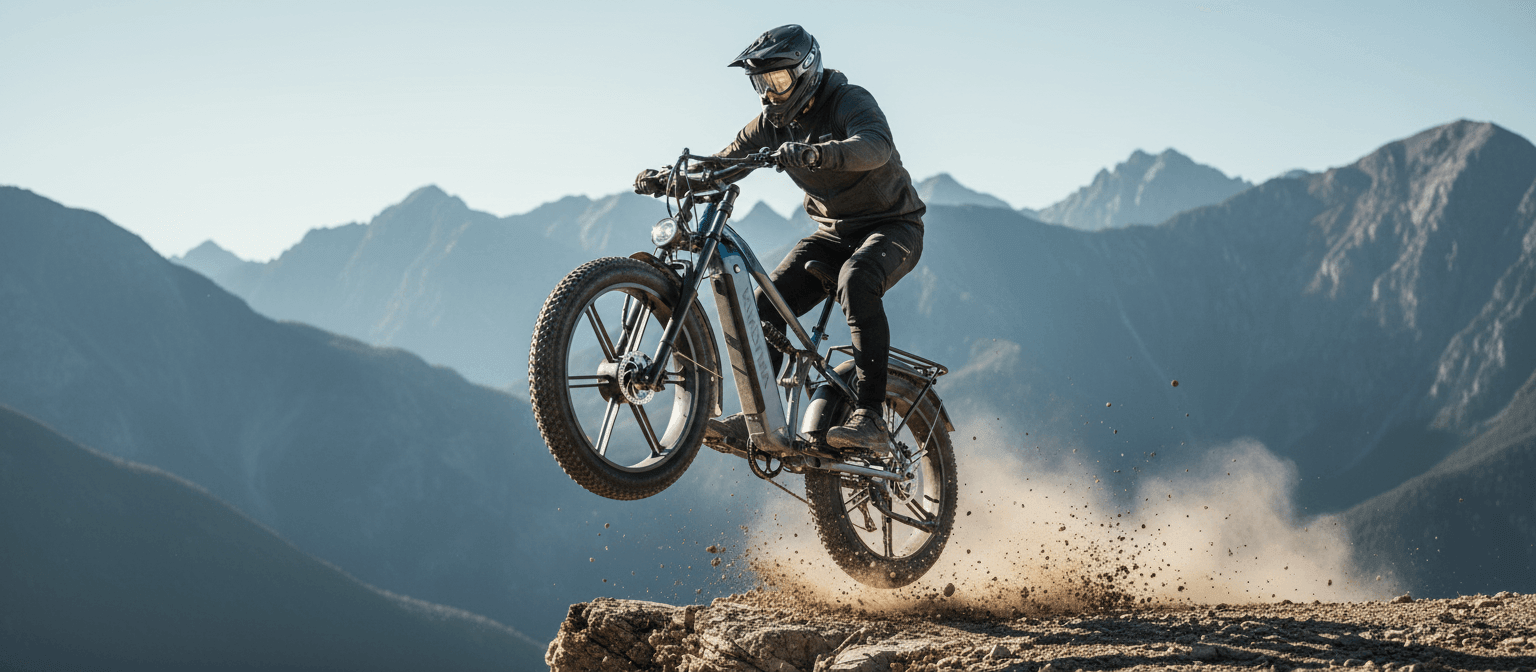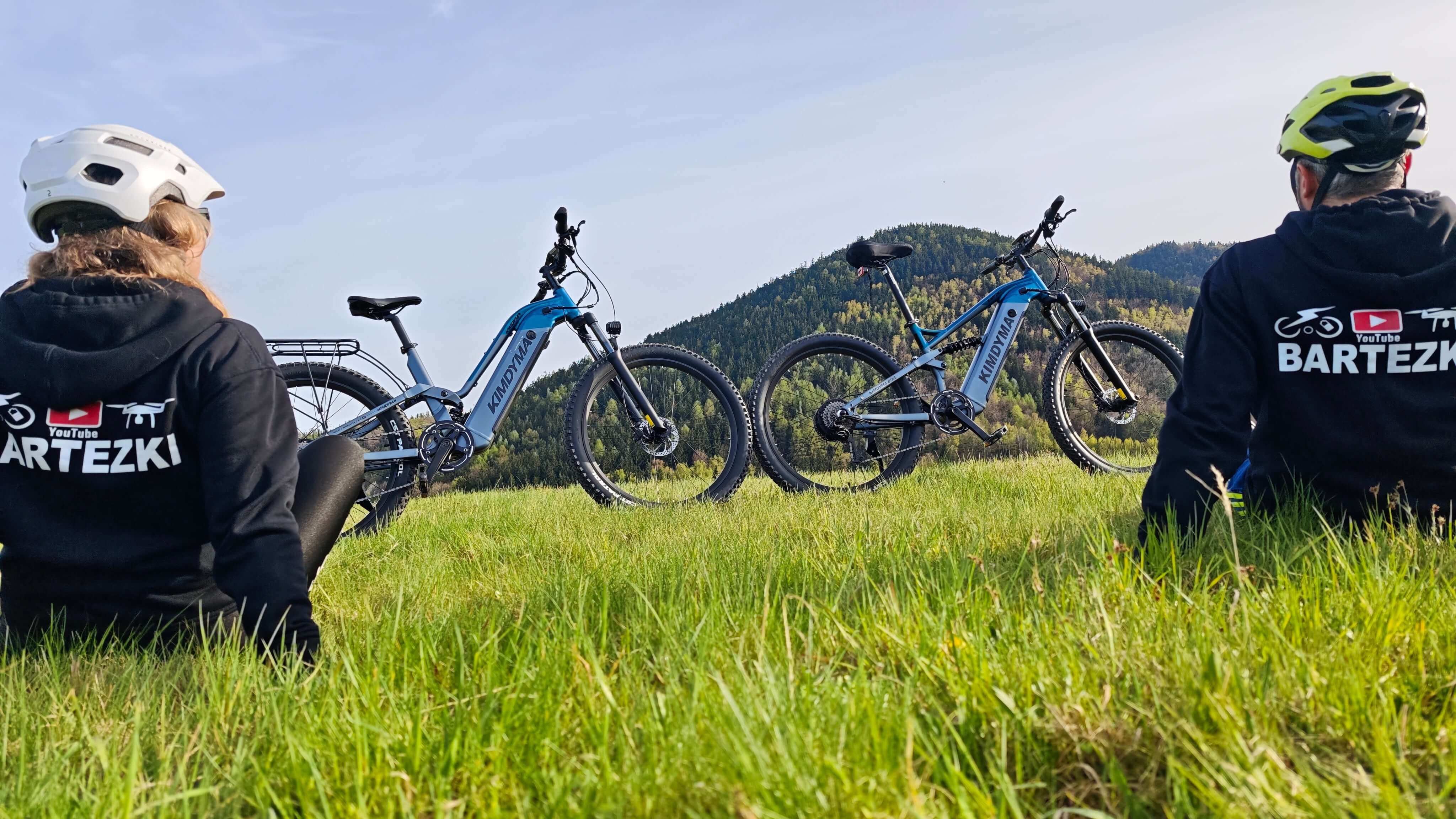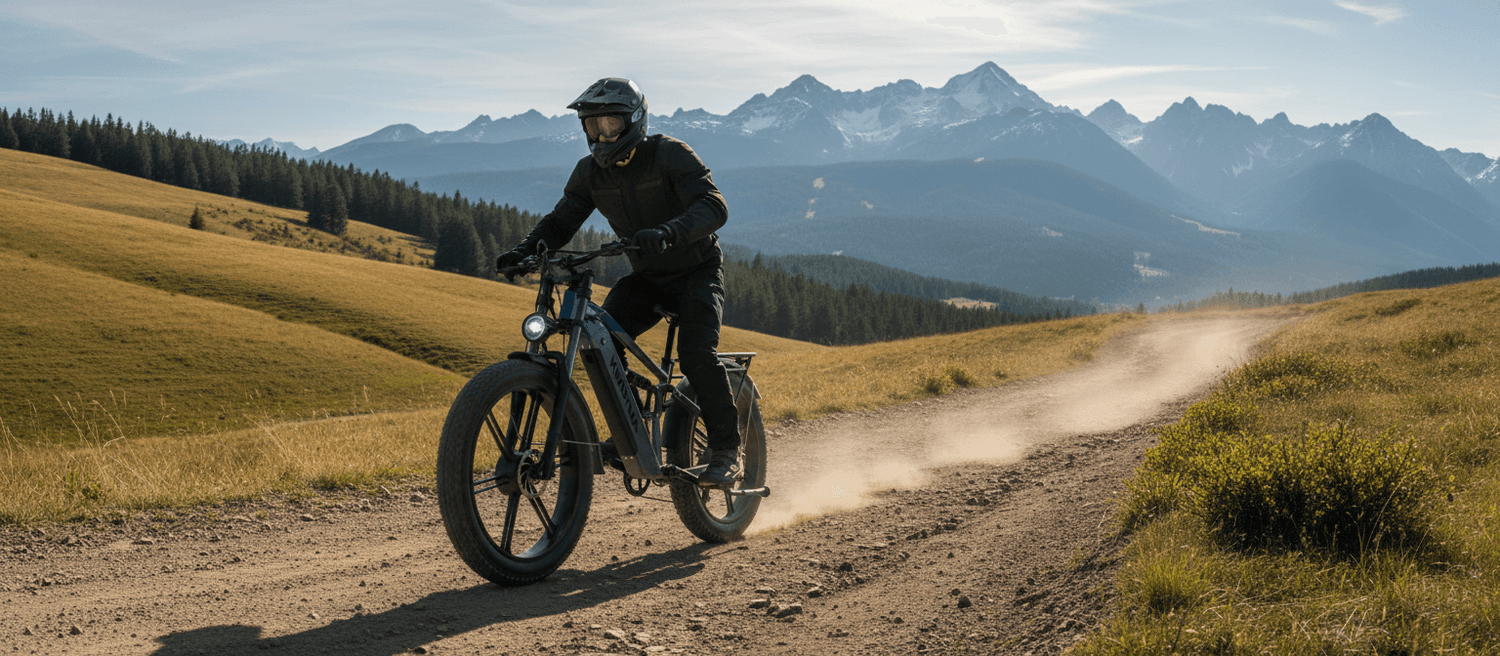
Spring break in Europe arrives with a kind of patient generosity. Bluebells push up through beech forests in the Cotswolds, vineyards in the Loire Valley turn from grey to green almost overnight, and the long meadow paths beside the Danube come alive with cyclists who have been waiting all winter for warmer mornings. For families, this is the season when an e-bike stops being a piece of equipment and becomes the reason a holiday actually works — kids who would never finish a 30-kilometre traditional ride happily complete one with a little electric help, and parents who carry the panniers, snacks, and youngest passenger get to enjoy the scenery instead of just enduring the climbs.
Why an E-Bike Changes Family Cycling
A pedal-assist bike — known technically as an EPAC, or pedelec under European regulation EN 15194 — gives you a motor that responds only when you pedal. There is no throttle, no scooter-like behaviour; the assistance simply flattens hills and stretches the distance the slowest member of your group can comfortably cover. For mixed-ability families, that is everything. A grandparent and a ten-year-old can ride the same route at the same pace, which is rarely true on conventional bikes.
European law caps pedal-assist speed at 25 km/h on public roads, with motor power limited to 250W of continuous output. KINDYMA models are configured to comply with these limits when used on roads and shared paths, with off-road performance settings reserved for private land. If you are planning routes through France, Germany, Italy, the Netherlands, or any other EU country, be sure to review the K01 & K02 display configuration guide before you set off.
Route 1: The Loire Valley Châteaux Loop, France
Distance: 35–60 km per day · Terrain: Flat to gently rolling · Best dates: Late March through April
The Loire Valley is the gentlest introduction to European cycle touring. The Loire à Vélo route follows the river for over 800 kilometres, but families typically tackle the stretch between Blois and Tours — a four-day loop that connects the fairytale châteaux of Chambord, Cheverny, Chenonceau, and Amboise. The cycle paths are paved, almost entirely separated from car traffic, and rarely climb more than a few metres at a time. Spring brings the famous gardens into early bloom, and the river lights soften beautifully in late afternoon.
Recommended bike: KINDYMA AURORA S
The Aurora S is built for exactly this kind of riding. Its low step-through frame means dismounting at every château, picnic stop, and bakery is genuinely effortless — important when you are doing it twenty times a day. The 48V 20Ah Samsung battery delivers enough range for a full day of riding without needing to charge between stops, and the 27.5"×2.8" CST Patrol tires roll comfortably over the mixed surfaces you will encounter on village detours. The rider height range of 155–185 cm makes it suitable for taller teenagers as well as adult riders.
Route 2: The Danube Cycle Path, Austria & Bavaria
Distance: 40–80 km per day · Terrain: Almost entirely flat, riverside · Best dates: April through early May
The Donauradweg from Passau to Vienna is widely considered the most family-friendly long-distance cycle route in Europe. Almost the entire 320-kilometre stretch follows dedicated cycle paths beside the river, with frequent ferries that let you cross to whichever bank has the better surface or the more interesting town. Wachau Valley apricot orchards bloom in April, the abbeys at Melk and Göttweig are extraordinary, and the route ends with a gentle ride into central Vienna.
Recommended bikes: KINDYMA AURORA S for women and shorter teens; KINDYMA TITAN X for taller riders
This route works well with mixed bikes because it is so undemanding. The Titan X's 21-speed Shimano drivetrain and Shimano M200 hydraulic disc brakes give larger riders precise control on the few descents into wine villages, while its 30.5 kg aluminum frame handles loaded panniers without complaint. Both models share the same 48V 20Ah Samsung battery platform, so a single charger covers the family overnight at guesthouses along the route.
Route 3: The Rhine Cycle Path, Germany & Switzerland
Distance: 45–70 km per day · Terrain: Flat with occasional vineyard climbs · Best dates: April through May
The EuroVelo 15 Rhine Cycle Route follows the Rhine from its Alpine source to the North Sea. For families, the segment between Basel and Strasbourg offers the best combination of scenery and infrastructure. You will pass medieval Alsatian villages, vineyard-covered slopes, and dense riverside forests where storks return to nest in April. The cycle path is well-signposted, frequently paved, and never strays far from a train station — useful insurance if a child decides at lunchtime that they are done for the day.
Recommended bike: KINDYMA TITAN X
The Titan X is the strongest choice for adults handling the longer daily distances this route invites. Its full-suspension setup — a TNL air-pressure adjustable front fork paired with a DNM 190mm rear shock — absorbs the cobblestones in Strasbourg's old town and the gravel along certain riverside sections without transmitting shock to the rider. The 80 N·m torque rating from the 500W rear hub motor gives confident climbing on the short vineyard detours that take you up to towns like Riquewihr and Eguisheim.
Route 4: The Cotswolds Country Lanes, England
Distance: 25–45 km per day · Terrain: Rolling hills, occasional steep sections · Best dates: Mid-April onwards
The Cotswolds in spring is a study in soft yellow stone and unexpectedly steep climbs. The National Cycle Network Route 45 and connected lanes link villages like Bourton-on-the-Water, Stow-on-the-Wold, and Chipping Campden through narrow country roads where cars are infrequent but the gradients can surprise riders used to flat European routes. This is where pedal-assist genuinely transforms the experience — what would be a punishing ride on an unassisted bike becomes a relaxed family day out.
Recommended bike: KINDYMA TITAN X
The Titan X earns its place here on the climbs. The 80 N·m torque output and adjustable air-pressure fork handle the 8–12% gradients you will meet between villages, while the 5-level pedal assistance system lets riders dial in just enough help to make the hills enjoyable rather than effortless. The Shimano M200 hydraulic brakes are reassuring on the long descents into valleys, where loaded panniers add momentum that needs controlling.
Route 5: The Baltic Coast Trail, Poland & Germany
Distance: 30–55 km per day · Terrain: Mixed — paved paths, forest tracks, sandy sections · Best dates: Late April through May
For families who want something less manicured, the Baltic coast offers a different kind of beauty. The EuroVelo 10 Baltic Sea Cycle Route winds through pine forests, past lakes, and along stretches of sand dunes between the German island of Rügen and the Polish coast at Świnoujście. Spring here is cooler than southern Europe but quieter, and the wildlife — sea eagles, cranes, beavers — is genuinely abundant. Some sections involve loose sand or forest gravel that defeats narrow-tyred touring bikes.
Recommended bike: KINDYMA K03 RANGER
This is the route where fat tires earn their keep. The K03 Ranger's 26"×4.0 tires float over soft sand sections that would bog down narrower wheels, and the dual 750W hub motors (1500W combined, distributed front and rear) provide all-wheel drive traction on loose gravel and forest tracks. Its 200 kg total weight capacity also makes it the right choice for parents carrying child seats, panniers, and camping gear. Range is shorter than the Titan X or Aurora S — 60 to 80 kilometres per charge — so plan accommodation that allows overnight charging, and use the lower pedal-assist levels on flat sections to extend range.
Practical Spring Riding Tips for Families
Spring in Europe is unpredictable. Mornings can start at 4°C and afternoons reach 18°C, so layering matters more than waterproofing. For battery performance, see our guide on how cold weather affects e-bike batteries — lithium-ion cells lose noticeable capacity below 10°C, so morning ranges may be shorter than expected until the battery warms up.
Charging logistics are simpler than they sound. KINDYMA batteries are removable and lockable, so you can carry them into guesthouses overnight rather than leaving the bike outside. A full charge takes 6–8 hours, which means starting the charger when you arrive at dinner gives you a full battery by morning. Most family-friendly routes pass through enough villages that you can also top up at lunch stops if needed.
For longer multi-day trips, the European Cyclists' Federation maintains updated information on cycle-friendly accommodation, train policies for bikes, and route condition reports across all EuroVelo routes. Combined with a bike chosen for the actual terrain you will ride, that planning is what turns a spring break from a logistical exercise into something everyone in the family will want to repeat next year.