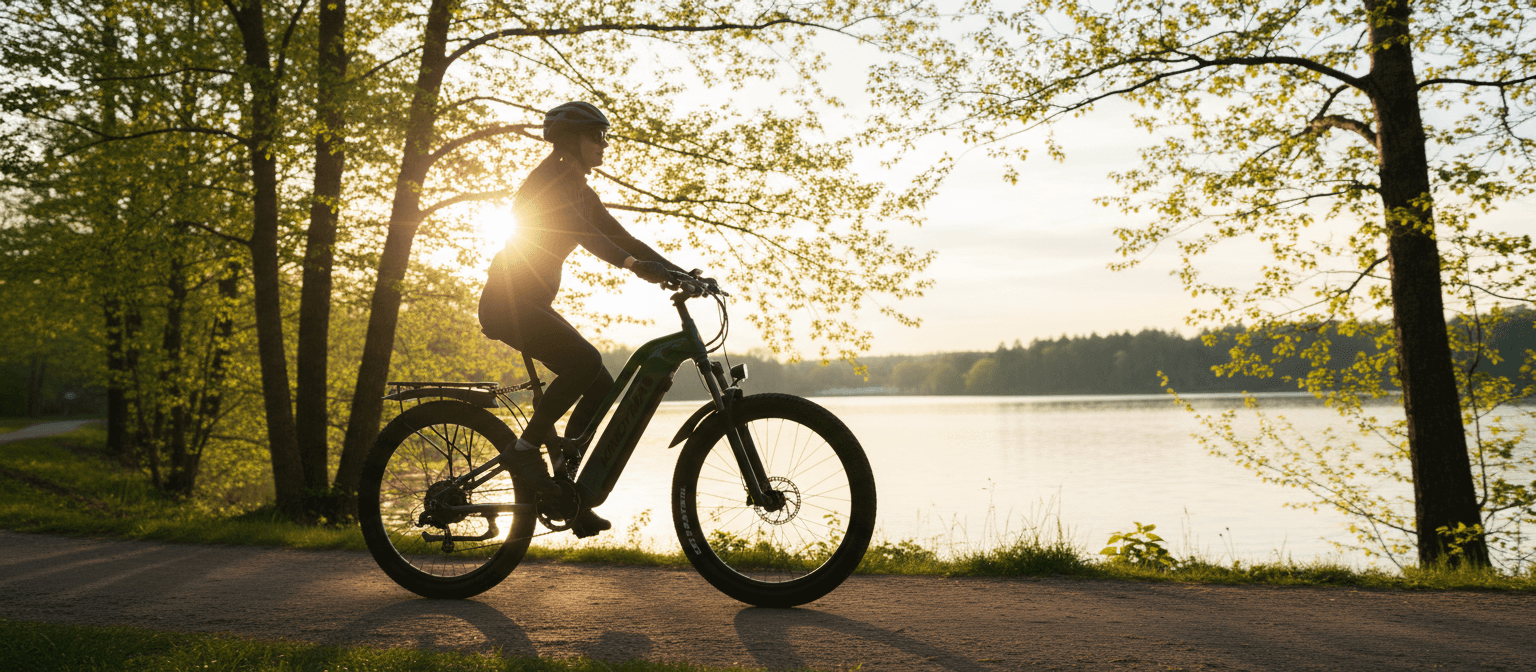
When the clocks spring forward on the last Sunday of March, something quietly magical happens for anyone who commutes by bike. That narrow, rushed ride home in fading light suddenly stretches into an open invitation — golden hour, warm air, and roads that feel less like obstacle courses and more like playgrounds. For e-bike riders across Europe, daylight saving time is the unofficial start of the best commuting season of the year.
Why the Evening Hour Matters for E-Bike Commuters
Most people finish work somewhere between 17:00 and 19:00. Before daylight saving starts, that window coincides with dusk or full darkness in much of Europe — especially at higher latitudes. After the switch, sunset slides forward by a full hour, turning a headlamp-and-reflector grind into a daylight cruise.
That extra hour changes commuter behaviour in measurable ways. Studies summarised by SAFER Traffic Research and similar road-safety bodies consistently show that collision risk for cyclists rises sharply in low-light conditions. Pushing the commute into daylight reduces that exposure. It also makes the ride feel less like a chore. You notice the trees budding, stop for coffee, take the scenic route along the river instead of the main road.
For e-bike riders, the effect is amplified. When you're not spending energy managing visibility, wind chill, and traffic stress in the dark, the motor assist becomes less about arriving alive and more about arriving refreshed. That's when the e-bike stops being transport and starts being a reason to go outside.
Stretching That Evening Hour Into Real Adventures
Here's the honest calculus: a standard analogue commute of 8 km each way takes most people roughly 25 to 35 minutes. On an e-bike with pedal assist, the same distance is comfortable in 15 to 20. Multiply that by a full extra hour of daylight and you've unlocked something substantial — enough time for a detour through a park, a longer loop home, or a genuine after-work ride before dinner.
This is where the right bike matters. A commuter e-bike limited to tight urban geometry feels cramped the moment the evenings open up. What you want is a machine comfortable in both worlds: stop-and-go city traffic on Monday, a gravel path along the canal on Thursday.
The TITAN X — For Riders Who Want the Evening to Go Further
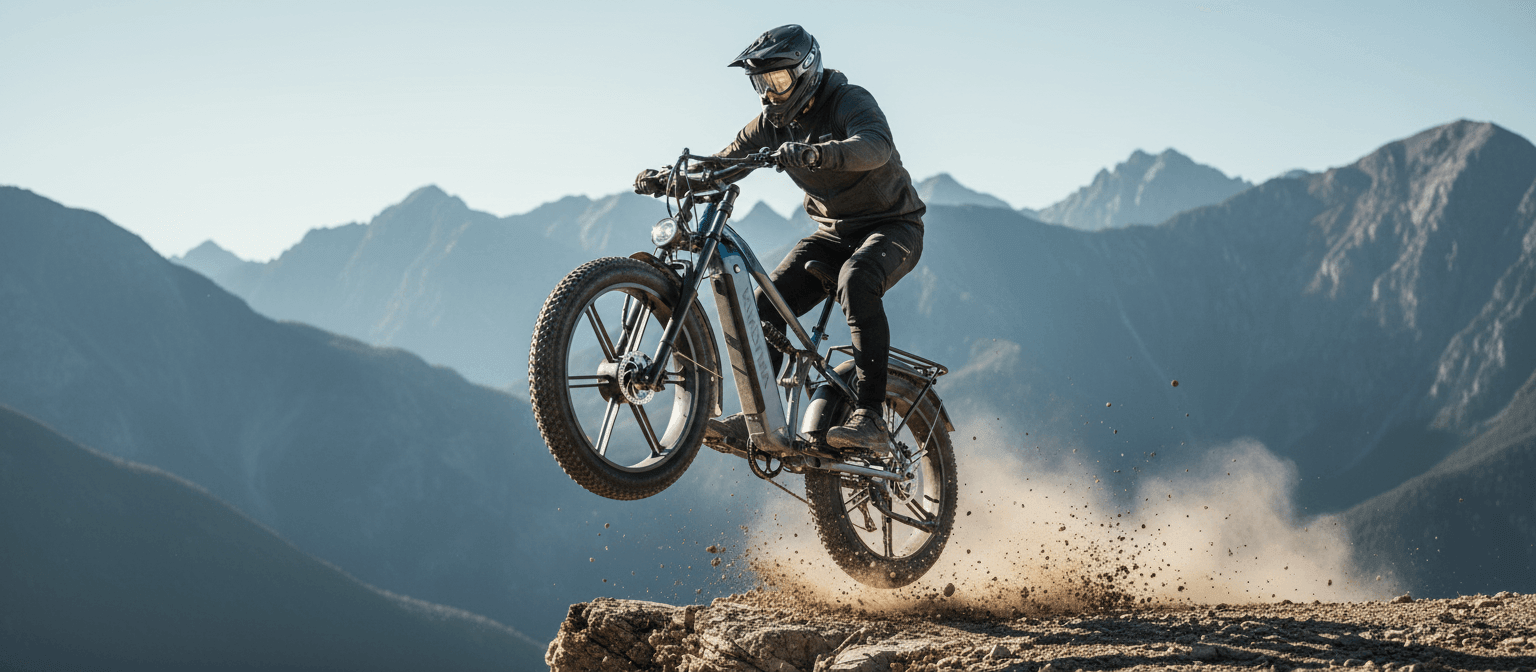
The TITAN X is built around a 500W rear hub motor paired with a 48V 20Ah Samsung-cell battery, delivering up to 130 km of pedal-assisted range in ECO mode. That number matters specifically because of daylight saving: with a full charge on Monday morning, a typical commuter can ride home the long way every evening of the week and still have margin for a weekend trail run.
The 27.5"×2.8" all-terrain tyres and full-suspension aluminium frame (TNL air-pressure fork up front, DNM 190mm rear shock) mean the bike doesn't punish you when you swap tarmac for forest singletrack on the way home. Shimano M200 hydraulic disc brakes with 160mm rotors provide the stopping confidence you want at 25 km/h pedelec speed, and the 21-speed drivetrain makes gentle climbs feel trivial. Net weight is 30.5 kg, and the bike suits riders between 165 and 195 cm.
Specs verified: EPAC/Pedelec compliant with EN 15194, IP65 water resistance, 150 kg total weight limit (rider plus cargo).
The AURORA S — Step-Through Elegance for the Commute That Wanders
The AURORA S shares the TITAN X's powertrain architecture — same 500W motor, same 48V 20Ah Samsung battery, same 130 km pedal-assist range — but wraps it in a low step-through frame designed for riders 155–185 cm tall. That geometry isn't just aesthetic. When you're finishing work in business clothes or stopping at the shops on the way home, the lower standover height transforms mounting and dismounting from a gymnastic move into something you barely think about.
The AURORA S shares the 27.5" dual-suspension platform and 21-speed Shimano drivetrain, keeping the ride smooth whether you're on cobblestones or a gravel trail at sunset. The softened frame curvature produces a lower centre of gravity, which translates to real-world stability — useful when the evening hour invites a longer route than you planned.
For anyone whose commute has historically ended the moment the sun sets, the AURORA S is the bike that says: keep going.
The K03 RANGER — When Evening Rides Leave the Pavement
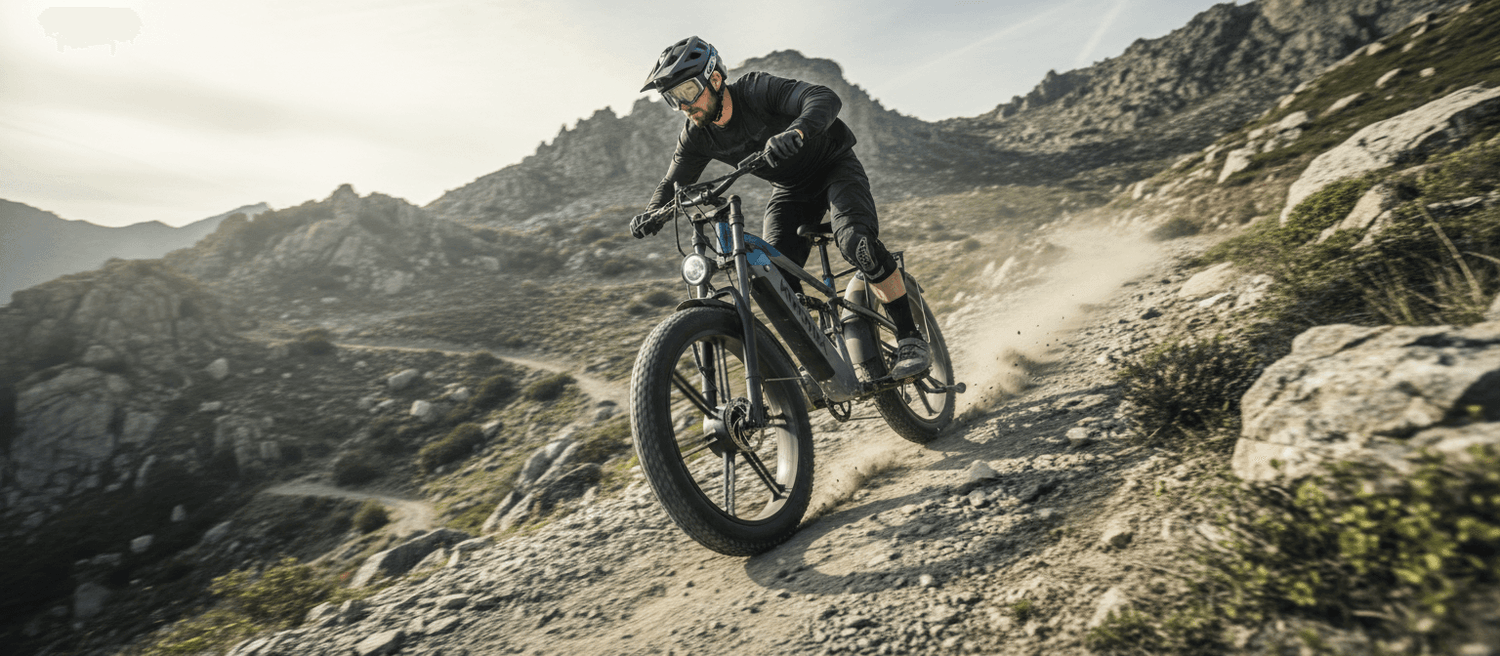
Some commutes aren't commutes. They're excuses. The K03 RANGER is built for riders who use the extra daylight to escape roads entirely — forest tracks, beach paths, gravel trails, snow-packed winter routes.
Its defining feature is the dual-hub motor system: two 750W brushless motors (front and rear) producing a combined 1500W, with 80 N·m of torque routed for balanced all-wheel traction. The 26"×4.0" fat tyres are the second half of the story — they float over surfaces that would stop a conventional e-bike completely. The 7-speed drivetrain keeps things simple, and hydraulic disc brakes front and rear handle the extra mass and speed confidently.
Range sits at 60–80 km on the same 48V 20Ah Samsung battery (two motors pull more current than one), the frame supports up to 200 kg total load, and the bike weighs 43.4 kg. That's a machine built for exploration rather than pure efficiency. When the evening hour gifts you daylight, the K03 RANGER is how you spend it somewhere that isn't asphalt.
A Few Practical Notes for Spring Riding
The extra hour of daylight comes with a few things worth checking on your bike. After winter storage — or even just months of shorter rides — a spring inspection pays off.
Tyre pressure is the quickest win. Cold weather causes pressure to drop; a tyre that felt fine in January may be noticeably underinflated by April. Correct inflation reduces rolling resistance and extends your battery range. The European Cyclists' Federation publishes general cycling safety guidance that's worth reviewing annually.
Battery condition matters too. Lithium-ion cells — including the Samsung 21700 cells used across the Kindyma lineup — slowly lose capacity with age and cycles. For a deeper look at how modern e-bike batteries behave across seasons and years, the Battery University reference on lithium-ion longevity is a solid non-commercial resource.
Brake pads and chain lubrication are the last two to check. Winter road salt is brutal on both. Clean and re-lube the chain before your first long evening ride, and check pad thickness on the hydraulic brakes — especially if you're riding a heavier bike like the K03 RANGER.
The Quiet Case for Commuting by E-Bike All Season
Daylight saving time makes the decision easier, but the real argument for swapping the car or the train for an e-bike isn't seasonal. It's compounding. Every evening you ride home through daylight instead of sitting in traffic is an hour returned to you — an hour of movement, fresh air, and autonomy. An e-bike with genuine range and a frame that handles mixed terrain turns that hour from a chore into something you look forward to.
The clocks will move back on 25 October 2026, and the commute will get darker again. Between now and then, there's a full stretch of European evenings waiting. Whether you want the trail-ready engineering of the TITAN X, the effortless step-through refinement of the AURORA S, or the all-terrain dual-motor capability of the K03 RANGER, the right e-bike makes that extra hour count.
Ride home in daylight. Take the long way.