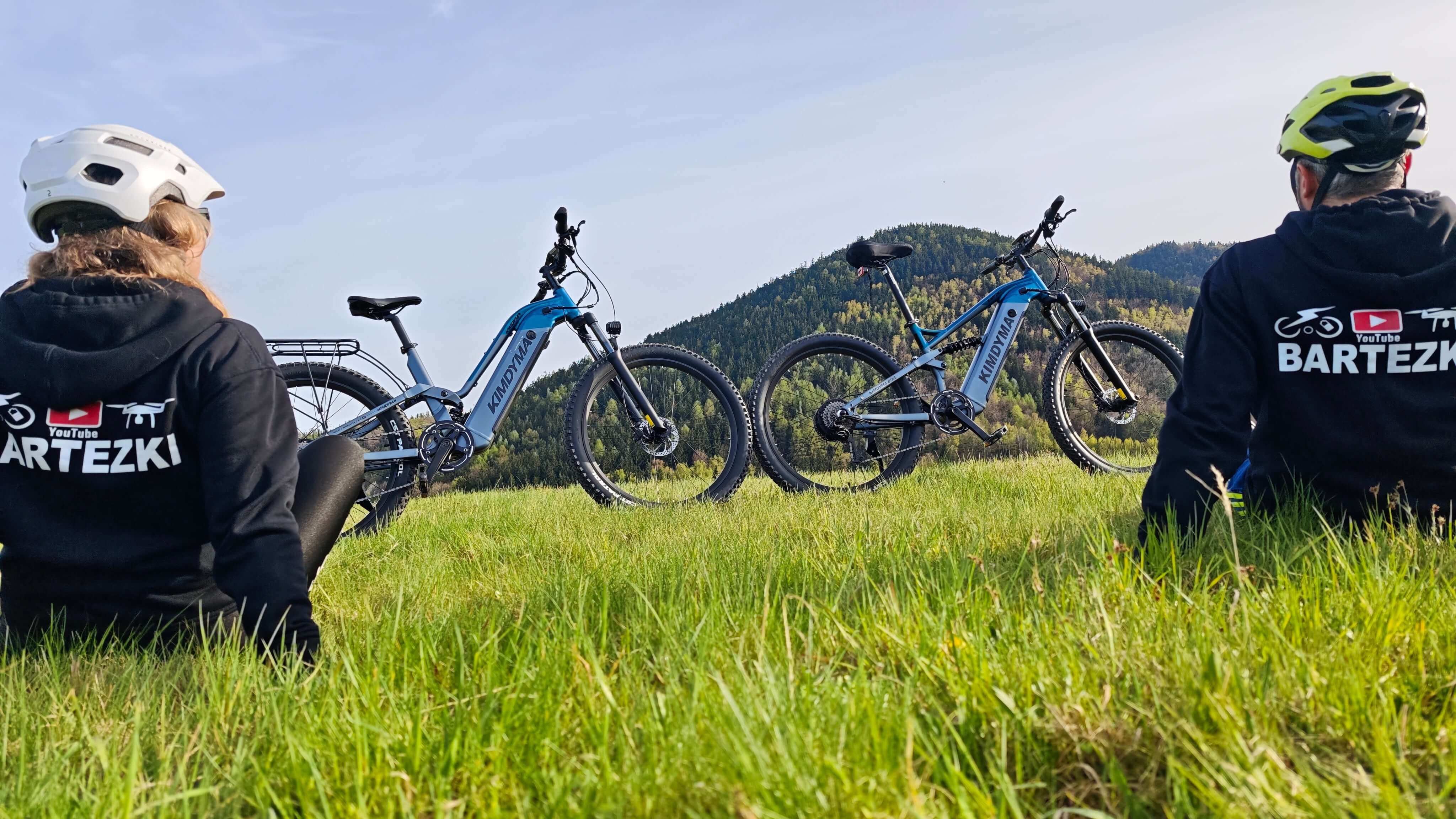
Why Trail Access Matters Before You Buy an E-MTB
Picture this: you've finally unboxed your new electric mountain bike, charged the battery overnight, loaded it onto the car, and driven two hours to a forest you've been dreaming about. Then a ranger flags you down at the trailhead. The bike is fine. The path you wanted to ride is not.
This scenario plays out across Europe more often than most riders realise, and it has very little to do with whether your e-bike is "legal" in the sense of being a pedelec. It is about something much older and messier: forest law, cantonal ordinances, regional decrees, and centuries of land-access tradition that vary wildly the moment you cross a national border, and sometimes a regional one.
The Two Layers of European E-MTB Law
European e-MTB rules sit in two distinct layers, and confusing them is the single most common mistake new riders make.
Layer one is the vehicle classification. This is the EU-wide pedelec definition, harmonised through the EN 15194 standard. To be treated as a bicycle anywhere in the EU, an e-bike needs to provide pedal assistance only, with a continuous rated motor power up to 250 watts and assistance that cuts off at 25 km/h. Anything beyond that is legally a moped or speed pedelec, with all the registration, insurance, and licensing that entails. You can read the full technical scope on the European Committee for Standardization page for EN 15194, and the underlying machinery directive is Regulation (EU) No 168/2013.
Layer two is the trail access law. Even if your bike is a perfectly compliant pedelec, that does not automatically grant you the right to ride a particular path. Forest acts, national park decrees, regional outdoor codes, and even individual landowner permissions decide where the wheels are allowed to turn. A 250W bike is still a bike, but a forbidden trail is still forbidden.
Most riders only think about layer one when they buy. Layer two is where they get fined.
Setting Up Your Kimdyma Bike for Layer One
Before we go country by country, a quick note on hardware. The Kimdyma Titan X K01 and the Kimdyma Aurora S ship with a 500W rear hub motor, a 48V 20Ah Samsung-cell battery, full suspension, and 27.5 by 2.8-inch tyres. Out of the box, the controller can deliver more than the EU pedelec ceiling, which is why both models are sold with a display configuration procedure for European public-road use. The official walkthrough is on the Kimdyma support page covering how to configure the K01 and K02 display for European regulations, and following that procedure puts the bike into pedal-assist-only mode capped at 25 km/h, so it sits firmly inside the EN 15194 envelope.
The Kimdyma K03 Ranger is a different proposition. With dual hub motors totalling 1500W of distributed power, 26 by 4.0 fat tyres, and a default top assisted speed of 45 km/h, this bike is built for off-road terrain, snow, sand, and private-land riding. To use it on European public infrastructure you would need to follow the K03 ebike compliance guide and stay within local moped or pedelec rules. Most owners of the K03 use it where its dual-motor traction actually shines: forest roads on private estates, gravel and snow tracks where motor vehicles are tolerated, and bike parks that explicitly permit higher-power e-bikes.
With that out of the way, here is the country-by-country picture.
Germany: Compliant Bike, Complicated Forest
Germany is the largest e-bike market in Europe and also the strictest at policing the pedelec definition. A bike that meets the 250W and 25 km/h limits is legally a Fahrrad and goes wherever a regular bicycle goes. A bike that exceeds either limit is a Kleinkraftrad and needs an insurance plate, an AM-class licence, and is banned from cycle paths.
Trail access, however, is a Bundesland matter, and the differences are dramatic. In Baden-Württemberg, the long-disputed Two-Metre Rule means cycling is forbidden on any forest path narrower than two metres, which kills off most singletrack by definition. The Deutsche Initiative Mountainbike has campaigned to abolish this for years, and you can follow their advocacy on the DIMB website. Bavaria, by contrast, is far more permissive on paper, with a constitutionally protected right to access nature, although protected-area decrees can still close specific trails. North Rhine-Westphalia and Hesse fall somewhere in between, with cycling permitted on dedicated paths but tightening enforcement.
Practical takeaway: a properly configured Titan X or Aurora S is welcome on forest roads, designated MTB trails, and bike parks across all of Germany. Singletrack is your variable. Always check the regional Landeswaldgesetz before riding unfamiliar terrain.
Austria: The Permission-Based Forest
Austria has some of the most beautiful alpine riding in Europe and, on paper, some of the most restrictive trail access. The 1975 Austrian Forestry Act gives the public a right to enter forests on foot but explicitly excludes cycling from that right. Mountain biking on forest roads or paths requires the consent of the forest owner, usually granted through signage or a regional contract.
In practice, this means a huge network of officially designated mountainbike Strecken, many of them in Tirol, Salzburg, Carinthia, and Styria, where tourism authorities have negotiated and paid for access on behalf of riders. The signposted routes are extensive and well-mapped through providers like Komoot and the Outdooractive trail platform. Outside those corridors, riding is technically illegal, and hunting associations have been historically aggressive about reporting violations.
For an EU-compliant pedelec the rules are identical to a regular bike. For the Aurora S step-through configured to 250W mode, Austria's marked alpine networks around Saalbach, Innsbruck, and the Zillertal are some of the most rewarding terrain on the continent. The IMBA Europe overview of Austrian trail advocacy is worth reading before a trip.
Switzerland: Cantonal Patchwork, Generous Spirit
Switzerland sits outside the EU but harmonises with the EN 15194 pedelec standard. Where Switzerland diverges is in the breadth of its cycle path network and its more relaxed treatment of S-pedelecs, which retain access to many cycle paths that would be off-limits in Germany.
For trail access the Swiss Civil Code grants a general freedom to roam through forest and pasture as long as use is not excessive. Cantonal rules layer on top, and a handful of cantons have introduced specific e-MTB-approved trail networks. Graubünden and Valais, in particular, have been pioneers in formal e-MTB tourism corridors. The full national context is on the Switzerland Mobility cycling portal.
The fat-tyre traction of the K03 Ranger is genuinely useful on Alpine winter routes that allow motorised access, but on public mixed-use paths you need the bike configured to pedelec limits.
France: Strict on Tampering, Welcoming on Trails
France treats EU-compliant pedelecs as standard bicycles with no insurance, registration, or licence requirement. What France is unusually strict about is anti-tampering: removing or modifying a speed limiter on a pedelec is prosecutable under criminal law, and recent enforcement campaigns in Paris, Lyon, and Marseille have escalated penalties significantly.
Trail access in France is generally permissive. Forêts domaniales managed by the Office National des Forêts allow cycling on most forest roads and signposted paths, and the country's PDIPR system designates an enormous network of legal off-road bike routes maintained at the departmental level. National parks have specific rules, and Mercantour, Écrins, and Vanoise restrict cycling to designated tracks only, but the regional parks like Vercors and Queyras are far more open.
A Titan X in pedelec mode is well suited to French alpine and Pyrenean terrain. The 80Nm of available torque from the geared hub motor handles long sustained climbs without overheating, which is the typical failure mode for cheap direct-drive systems on extended ascents.
Italy: Reactive Regulation, Reactive Closures
Italy has clarified its e-bike rules in recent years and now treats pedelecs as bicycles, with full access to limited traffic zones in historic city centres and most signposted alpine trails under 2,000 metres elevation. Above that altitude or inside national park boundaries, regional decrees take over.
The Dolomites, the Aosta Valley, and the area around Lake Garda offer some of the world's best e-MTB terrain. The flip side is that Italian regulation tends to be reactive: a high-profile accident or land-use conflict can trigger blanket bans within a single season. The recent debate about peak motor power, covered in detail by Cycling Electric's reporting on IMBA's e-MTB power concerns, is a live political issue in Italy specifically.
For practical trip planning, the TrailForks app marks Italian trails as e-MTB approved or not, which is more reliable than guessing from regional websites.
Spain: Welcome Almost Everywhere, Watch the Natural Parks
Spain treats pedelecs as bicycles and imposes no national insurance or licence requirement. Off-road access on the Iberian Peninsula is generally generous outside the formally protected natural parks. Catalonia, Aragón, and the Basque Country all maintain extensive signposted MTB networks, with the Pyrenean foothills offering some of the best long-distance bikepacking in southern Europe.
The exception is the natural park system. Picos de Europa, Sierra de Guadarrama, and many of the Andalusian parks restrict cycling to specifically designated tracks. The autonomous communities can also implement stricter rules, and the Balearic and Canary Islands have specific e-bike tourism regulations including rental restrictions.
Spanish summer heat is brutal on lithium-ion chemistry, and our guidance on e-bike battery technology and modern range is worth reviewing before a midsummer ride. The 960 watt-hours stored in the Aurora S battery delivers genuine real-world range, but heat above 35°C will accelerate cell wear if you charge directly after a long climb.
Netherlands: Bike Country, Limited Off-Road
The Netherlands is the densest cycling country on earth but also the flattest, and dedicated mountain biking happens on a relatively small number of formal MTB tracks rather than open forest. National park policy restricts cycling to designated tracks only, and Dutch forestry agency Staatsbosbeheer publishes maps of permitted MTB routes that are rigorously enforced.
What makes the Netherlands distinctive in 2026 is enforcement against modified fat-tyre e-bikes. Dutch police are deploying mobile dyno units to test e-bike speeds at the roadside, and any bike that delivers assistance above 25 km/h faces immediate fines and potential seizure. A Kimdyma K03 Ranger ridden in factory-default mode on a Dutch cycle path would attract exactly that attention. Configure it correctly using the K03 compliance guide before riding any public infrastructure.
United Kingdom: EAPC Rules and a Country-by-Country Picture
The UK retained the European pedelec standard post-Brexit, calling them Electrically Assisted Pedal Cycles. The technical limits are identical: 250W continuous, 15.5 mph (25 km/h) cut-off, pedal assist only. Riders must be at least 14, but no licence, registration, or insurance is required. The official summary is on the UK government EAPC page.
Off-road access is where the four UK nations diverge sharply.
England and Wales permit cycling on bridleways and byways but not on footpaths. The bridleway network is extensive but not comprehensive, and unauthorised singletrack remains a grey area despite frequent use. Scotland is the outlier, with the 2003 Land Reform Act establishing a right of responsible non-motorised access across most land. Pedelecs are treated as bicycles for the purposes of this right, opening up vast areas of Scottish hill country to e-MTB exploration. The Scottish Outdoor Access Code sets out the responsibilities that come with that freedom, and Developing Mountain Biking in Scotland has published specific e-bike guidance covering trail etiquette and battery preparedness.
Northern Ireland is the most restricted, with very limited public access rights to off-road land outside designated forest parks.
Scandinavia: Allemansrätten and the Open North
Sweden, Norway, and Finland operate variations of allemansrätten, the right of public access. In broad terms, EU-compliant pedelecs can be ridden anywhere a regular bike can, which is to say almost everywhere outside private gardens, cultivated fields, and national park core zones. Norwegian and Finnish trail networks are particularly suited to long-distance bikepacking, and the long summer daylight hours allow for genuinely massive routes on a 130-kilometre-range bike.
The cold is the practical limit. Below freezing, lithium-ion capacity drops noticeably, which we cover in the Kimdyma guidance on cold-weather e-bike riding. A removable Samsung battery makes warm storage between rides straightforward, and that single design choice does more for Nordic range than any motor upgrade.
Eastern Europe: Open Doors, Less Infrastructure
Poland, Czechia, Slovakia, Hungary, and Slovenia all treat EU pedelecs as bicycles. Trail access is generally open: forest roads are widely cyclable, and dedicated MTB networks have grown rapidly in the Tatras, the Beskids, and around Lake Bled. Slovenia in particular has invested heavily in marked e-MTB routes, with the Soča Valley and the Julian Alps offering professionally maintained networks.
Infrastructure for charging on multi-day trips can be patchier than in Germany or Austria, but rural guesthouses are increasingly adapted to e-bike tourism. The 6-to-8-hour charge time of the Titan X battery from a standard wall socket means an evening stop at a pension reliably restores a full day's range.
Practical Rules That Apply Almost Everywhere
A few principles cut across borders and are worth internalising regardless of where you ride.
Yield to pedestrians and equestrians on all shared-use paths. The speed differential between an e-MTB on a climb and a hiker is the single most cited reason for proposed access restrictions across Europe.
Stay on marked routes inside national parks and Natura 2000 sites. Even where pedelecs are technically permitted, going off-piste in a protected area can carry fines well above what a bike is worth.
Configure for compliance before you cross a border. The display setup that makes a Titan X legal in Germany is the same setup that makes it legal in Italy, France, and the Netherlands. The factory-default off-road mode is for private land only, and that distinction is enforced.
Keep your bike's documentation accessible. The EN 15194 declaration of conformity that ships with every Kimdyma bike is what proves to a checkpoint inspector that the machine is a bicycle, not a moped.
Choosing the Right Kimdyma for Your Riding Country
If you live in Germany, France, Italy, Spain, or any other country where most of your riding will be on public forest roads and designated MTB trails, the Aurora S step-through e-MTB and the Titan X full-suspension e-MTB configured to 250W pedelec mode are both squarely within EU rules. Both share the same 48V 20Ah Samsung battery, the same 80Nm of climbing torque, and the same Shimano M200 hydraulic disc brakes. The difference is geometry and rider fit: the Aurora S is built around a 155 to 185 cm rider with a low standover, while the Titan X targets 165 to 195 cm with a more aggressive trail position.
If your riding is mostly on private land, in countries with more permissive rural access like Scotland or Scandinavia, or you specifically need traction on snow, sand, or deep mud, the K03 Ranger dual-motor fat-tyre e-bike with its 1500W of distributed power and 4-inch tyres is the more capable tool. Just be aware that running it in default mode on European public roads or cycle paths is not legal and configuration to compliant limits is non-negotiable for those environments.
The wrong bike for the law you ride under is a more expensive mistake than most people realise. The right bike, properly configured, lets the trail be the trail.