Understanding Cold Weather Battery Behaviour
Lithium-ion batteries, including the Samsung cells found in models like the KINDYMA TITAN X and KINDYMA AURORA S, operate through chemical reactions that slow down in cold temperatures. The electrolyte solution inside the battery thickens as temperatures fall, creating increased internal resistance that limits how efficiently the battery can deliver power.
According to research on lithium-ion battery performance, this capacity reduction is temporary rather than permanent. Once the battery warms up during use or returns to room temperature, much of the lost capacity becomes accessible again. This distinction matters because it means winter range loss does not indicate battery damage under normal riding conditions.
Real-World Range Results by Temperature
European riders reported consistent patterns when riding their e-bikes through winter months. The 48V 20Ah battery configuration common in quality electric mountain bikes showed predictable performance across different temperature bands.
Mild Cold: 5°C to 10°C
Riders in this temperature range experienced range reductions of approximately 10 to 15 percent compared to summer performance. A bike rated for 160 kilometres of pedal-assist range in ideal conditions typically achieved 136 to 144 kilometres. Most riders found this reduction manageable for daily commuting and weekend exploration.
Moderate Cold: 0°C to 5°C
At freezing point and slightly above, range reductions increased to roughly 20 percent. The same 160 kilometre rated range dropped to approximately 128 kilometres. Riders noticed that batteries stored indoors overnight and then used immediately performed better than those left in cold garages or sheds.
Deep Cold: Below 0°C
When temperatures dropped below freezing, range reductions of 30 to 40 percent became common. Some Nordic riders pushing into -10°C conditions reported accessing only 50 to 60 percent of their normal capacity. However, these same riders noted that their bikes continued functioning safely, with the battery management system protecting the cells from damage.
How Full Suspension Affects Winter Performance
The TITAN X features a full suspension system with an adjustable air-pressure front fork and DNM 190mm rear shock, while the AURORA S uses the same suspension technology with geometry optimised for a comfortable riding position. In winter testing, these suspension systems proved valuable beyond simple comfort. On frozen or uneven surfaces, the suspension helped maintain tyre contact with the ground, improving traction and reducing the jarring impacts that can affect battery connections over time.
Riders using the TITAN X on forest trails covered in frost reported that the 80Nm of torque from the 500W motor provided smooth power delivery even on slippery uphill sections. The key was using lower pedal-assist levels to prevent sudden power surges that could cause the rear wheel to spin on reduced-traction surfaces.
Tyre Pressure and Traction Strategies
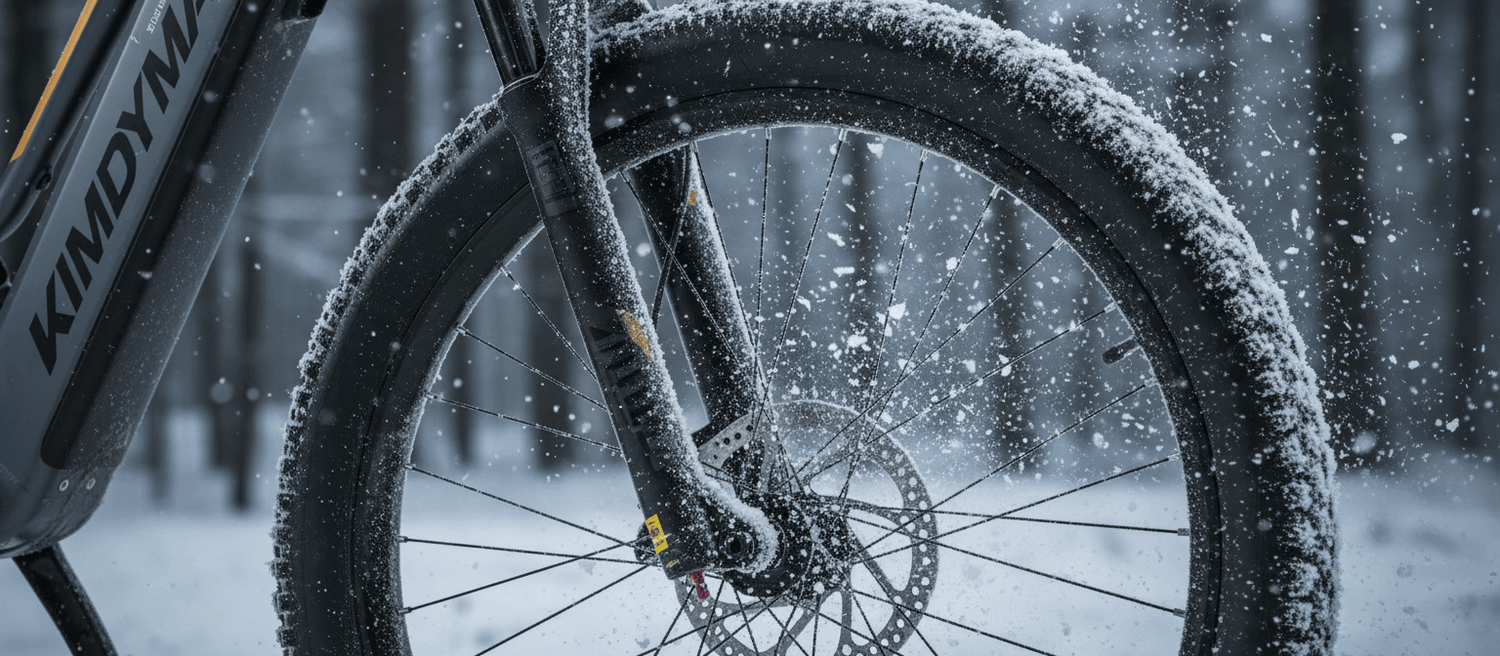
The 27.5 x 2.8 inch all-terrain tyres equipped on both the TITAN X and AURORA S provide a wider contact patch than standard mountain bike tyres. European riders found that adjusting tyre pressure made a significant difference in winter handling. According to guidance on winter tyre pressure adjustment, reducing pressure by 10 to 20 percent from normal summer settings increases the contact area between tyre and road surface.
Riders in the Netherlands and northern Germany who regularly encountered wet cobblestones and frosty bike paths reported improved stability after making these adjustments. The wider CST Patrol tyres on both models responded well to lower pressure without the sidewall instability that narrower tyres can experience.
Battery Care Practices That Extended Winter Range
The most successful winter riders followed consistent battery management practices. Storing the removable 48V 20Ah Samsung cell battery indoors at room temperature before rides made a measurable difference. Riders who began their commute with a battery at 20°C rather than one that had been in a 5°C garage reported 15 to 20 percent better initial performance.
Charging practices also mattered. The 54.6V smart charger included with both KINDYMA models works most efficiently when the battery is at room temperature. Riders who attempted to charge cold batteries immediately after winter rides found that the charge completed more slowly and sometimes triggered the battery management system to limit charging current as a protective measure. Allowing the battery to warm naturally for 30 minutes before connecting the charger resolved this issue.
Research on e-bike battery winter protection suggests that neoprene battery covers can help maintain operating temperature during rides. Some European riders reported using these covers in temperatures below -5°C, finding that they slowed heat loss from the battery during use and helped maintain more consistent voltage output.
Braking Performance in Winter Conditions
Both the TITAN X and AURORA S feature Shimano M200 hydraulic disc brakes with 160mm rotors. Riders found these brakes performed reliably in cold conditions, though stopping distances increased on wet or icy surfaces regardless of brake quality. The brake cut-off sensor integrated into both models proved valuable in winter, immediately cutting motor power when either brake lever was engaged. This prevented situations where motor assistance could work against braking effort on slippery descents.
Experienced winter riders recommended applying brakes earlier and more gradually than in summer conditions. The combination of hydraulic brakes and motor cut-off provided consistent stopping power, but the reduced traction available from cold or wet road surfaces meant that technique mattered as much as equipment quality.
Display and Electronics in Cold Weather
The KT-LCD5 display fitted to both models remained readable and responsive in temperatures down to -10°C according to Nordic riders. The backlit screen proved particularly useful during dark winter commutes, and the real-time battery health monitoring helped riders track capacity changes as temperatures dropped during longer rides. The IP65 water resistance rating meant that snow, slush, and winter rain did not affect display functionality.
Practical Recommendations from European Riders
Based on collective feedback from riders across multiple countries, several practices consistently improved winter riding experiences. Starting with a room-temperature battery and planning routes that allow for reduced range provided the foundation for reliable winter riding. Using ECO mode or lower pedal-assist levels extended range while also reducing the risk of wheel spin on slippery surfaces.
For riders using the AURORA S with its step-through frame design, the easier mounting proved especially practical when wearing bulky winter clothing. The upright riding position also provided better visibility in reduced light conditions common during winter months.
The 21-speed Shimano drivetrain on both models allowed riders to maintain comfortable pedalling cadences even with reduced motor assistance. Using lower gears and maintaining steady pedal input helped the motor operate efficiently while providing predictable power delivery on variable surfaces.
Conclusion: Winter Riding Remains Practical
The collective experience of European riders demonstrates that electric bikes remain practical transportation and recreation tools throughout winter. Range reductions are real but predictable, and simple practices like indoor battery storage and appropriate tyre pressure adjustment help maximise available capacity. The robust construction of modern e-bikes, including features like hydraulic disc brakes, full suspension systems, and weather-resistant electronics, provides reliable performance even in challenging conditions.
Understanding how cold affects your e-bike allows you to plan accordingly rather than being caught off guard by reduced range. With the right expectations and preparation, winter riding offers unique rewards: quieter trails, beautiful frost-covered landscapes, and the satisfaction of maintaining active transportation through all seasons.