Understanding Traction Fundamentals
Traction on slippery surfaces follows basic physics principles. The friction between your tire and the ground determines how well your bike grips during acceleration, braking, and cornering. Two primary factors influence this friction: the contact patch area where rubber meets road, and the downward force pressing the tire against the surface.
Electric bikes typically weigh more than their traditional counterparts due to the motor and battery systems. This additional mass creates greater downward force on the tires, which can actually improve grip in many winter conditions. The increased weight helps the tires maintain better contact with the road surface, reducing the likelihood of the wheel spinning freely on loose snow or gravel.
Research from institutions studying bicycle dynamics and tire behavior confirms that wider tires with appropriate tread patterns significantly outperform narrow slick tires in winter conditions. The contact patch size and tread design matter more than vehicle weight for maintaining grip on compromised surfaces.
How Motor Power Affects Winter Riding
The motor on an electric bike introduces both advantages and considerations for winter traction. A well-designed pedal assist system delivers power smoothly and progressively, matching your pedaling input to provide consistent acceleration without sudden torque spikes that might break traction.
Modern e-bike motors with cadence and torque sensors read your pedaling rhythm and apply assistance accordingly. This measured power delivery actually provides more consistent traction than the irregular power output of tired human legs late in a winter ride. When your muscles fatigue, you tend to pedal in uneven bursts, which can cause rear wheel spin on slippery surfaces.
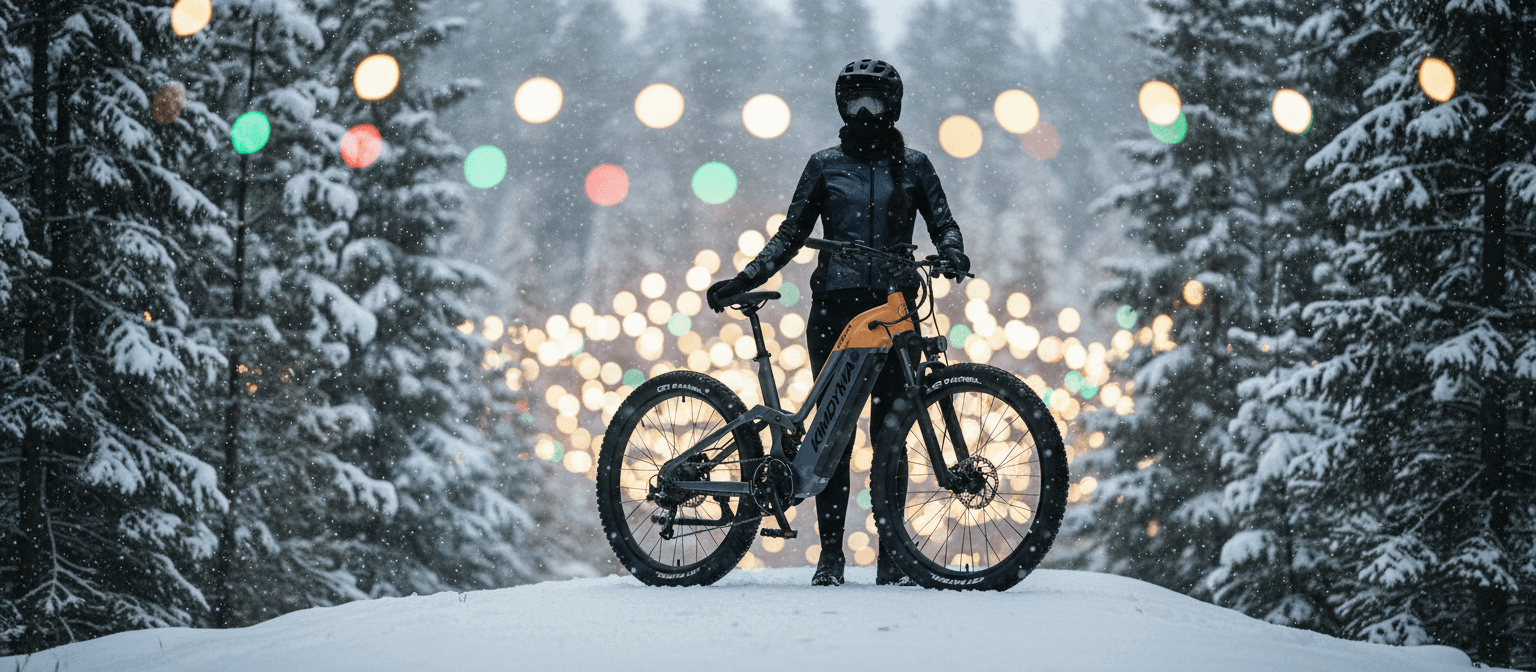
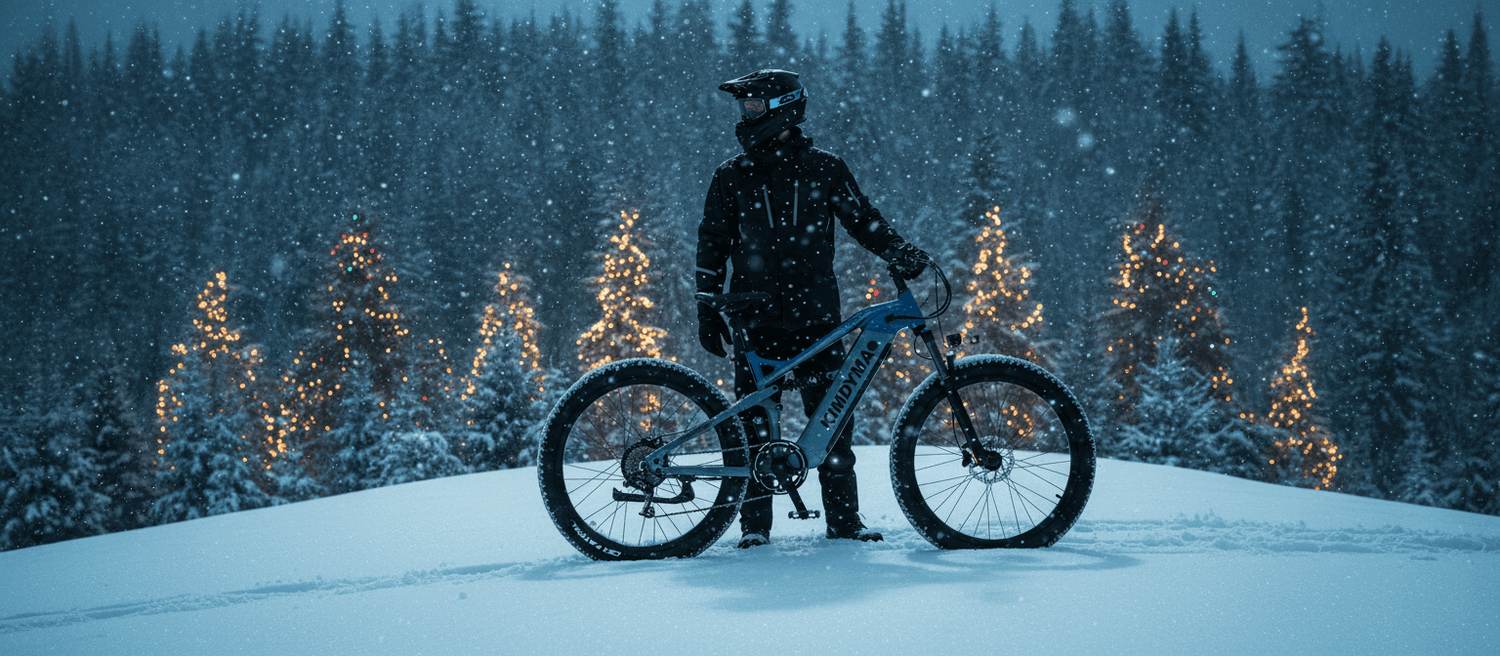
The KINDYMA Titan X features a 500W brushless motor with five pedal assist levels, allowing riders to select lower power settings when conditions demand gentler acceleration. The 80 Nm torque output delivers power progressively rather than in sudden bursts, giving riders better control on unpredictable winter terrain.
The Role of Tire Specifications
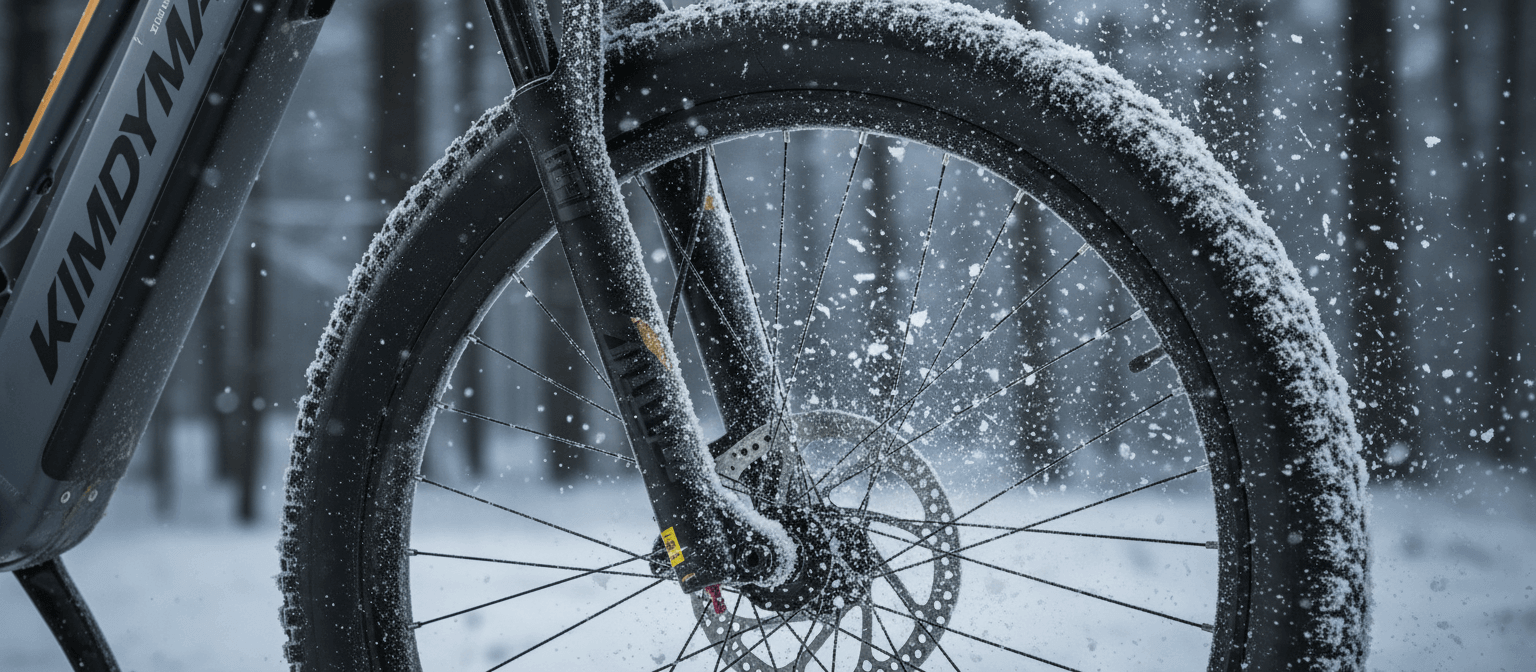
Tire width and tread pattern play decisive roles in winter traction, often outweighing other factors. Wider tires create a larger contact patch with the ground, distributing the weight of bike and rider across more surface area. This broader footprint provides better flotation over loose snow and improved grip on packed surfaces.
The 27.5 x 2.8 inch tires equipped on the KINDYMA Aurora S offer substantial width that enhances stability on varied winter surfaces. These all-terrain tires with puncture-resistant casings maintain their grip across conditions ranging from wet pavement to light snow, providing confidence when roads become unpredictable.
Tire pressure adjustments also significantly affect winter traction. Running slightly lower pressure than summer settings increases the tire footprint and allows the rubber to conform better to surface irregularities. Many experienced winter cyclists reduce pressure by 10-15% below their normal settings when temperatures drop. Resources from cycling tire experts provide detailed guidance on optimizing pressure for different conditions.
Weight Distribution and Balance
Where weight sits on a bicycle affects handling characteristics and traction distribution between front and rear wheels. Electric bikes concentrate additional mass at specific locations, typically the rear hub for hub motors or the bottom bracket area for mid-drive systems, and the downtube or rear rack for the battery.
This centralized weight distribution on quality e-bikes creates a lower center of gravity compared to carrying equivalent weight in a backpack or panniers on a traditional bike. The lower center of gravity improves stability, particularly when navigating turns or sudden obstacles on slippery surfaces.
The rear hub motor configuration used in the Titan X electric mountain bike places motor weight directly over the driven wheel, increasing rear traction. Combined with the 48V 20Ah Samsung battery positioned on the frame, the weight distribution remains balanced for confident handling across winter conditions.
Braking Considerations in Cold Weather
Braking performance matters as much as acceleration grip for winter safety. Hydraulic disc brakes have become standard on quality electric bikes because they provide consistent stopping power regardless of wet or cold conditions. Unlike rim brakes that can struggle when rims become wet or icy, disc brakes apply force directly to rotors mounted at the wheel hub.
Both the Aurora S step-through e-bike and Titan X models feature Shimano M200 hydraulic disc brakes with 160mm rotors. These braking systems include power cut-off sensors that automatically disengage the motor when you apply the brakes, preventing the unsettling sensation of the motor fighting against your braking input on slippery descents.
The motor cut-off function represents an important safety feature often overlooked when comparing e-bikes to traditional bicycles. On a regular bike, only your legs provide propulsion, so there is no possibility of conflicting inputs. Electric bikes with properly integrated brake sensors provide the same predictable braking behavior while adding the benefit of motor assistance when you want it.
Suspension and Shock Absorption
Winter surfaces often hide unexpected bumps, frozen ruts, and patches of ice beneath thin snow cover. Suspension systems help maintain tire contact with the ground when encountering these obstacles, preserving traction through situations where a rigid bike might bounce and lose grip.
Full suspension electric mountain bikes excel in these conditions. The combination of front fork travel and rear shock absorption keeps both wheels planted when the terrain becomes unpredictable. Air-pressure adjustable forks allow riders to tune suspension response for their weight and the specific conditions they encounter.
The TNL air-pressure adjustable front fork and DNM 190mm rear shock on the KINDYMA Titan X mountain e-bike provide substantial travel to absorb winter surface irregularities. This full suspension configuration maintains tire contact through conditions that would challenge rigid or hardtail alternatives.
Practical Techniques for Winter E-Bike Riding
Rider technique ultimately determines how safely any bicycle, electric or traditional, handles winter conditions. Starting in a lower pedal assist level allows you to gauge available traction before committing full power. Gradually increasing assistance as you assess grip conditions prevents sudden wheel spin that could cause loss of control.
Smooth inputs matter for everything you do on slippery surfaces. Gradual acceleration, progressive braking, and gentle steering inputs keep the bike stable when grip is limited. Avoid sudden movements that could overcome available traction. The consistent power delivery from a quality e-bike motor actually supports this smooth riding style better than the inherently variable output of human pedaling.
Looking further ahead than normal gives you more time to react to hazards. Ice patches, wet leaves, and sections of packed snow often appear suddenly in winter conditions. Maintaining a longer sight line allows you to adjust speed and line choice before reaching challenging sections rather than reacting at the last moment.
Battery Performance in Cold Temperatures
Cold weather affects lithium battery performance in ways that indirectly relate to traction. Battery capacity decreases temporarily in low temperatures, and research from battery technology specialists indicates that capacity can drop 10-20% in near-freezing conditions. Planning for reduced range ensures you maintain enough power for the entire ride.
High-quality battery cells handle temperature extremes better than budget alternatives. The Samsung 21700 cells used in KINDYMA electric bikes are rated for operation across a wide temperature range and include battery management systems that protect against cold-weather damage. The Aurora S electric bike offers up to 160km range in pedal assist mode under normal conditions, providing substantial buffer even when cold weather reduces effective capacity.
Storing your battery indoors between rides and installing it just before departure helps maintain optimal temperature. The removable and lockable battery design on modern e-bikes makes this practice convenient, allowing you to keep the battery warm until you are ready to ride.
Conclusion
The question of whether electric bikes slip more than regular bikes in winter does not have a simple yes or no answer. Multiple factors interact to determine traction, and many characteristics of quality e-bikes actually favor winter grip rather than hinder it.
The additional weight of motor and battery systems increases downward force on tires, potentially improving grip. Smooth motor power delivery provides more consistent acceleration than fatigued human legs. Wide tires standard on many e-bikes offer better flotation and grip on winter surfaces. Hydraulic disc brakes with motor cut-off sensors ensure predictable stopping. Full suspension systems maintain tire contact through surface irregularities.
Choosing an electric bike designed for varied terrain, such as the KINDYMA Titan X for aggressive riding or the Aurora S for comfortable commuting and recreational riding, provides the tire width, braking capability, and power management features that support confident winter cycling. Combined with appropriate riding technique and realistic expectations about cold-weather conditions, an electric bike can be an excellent choice for year-round transportation and recreation.