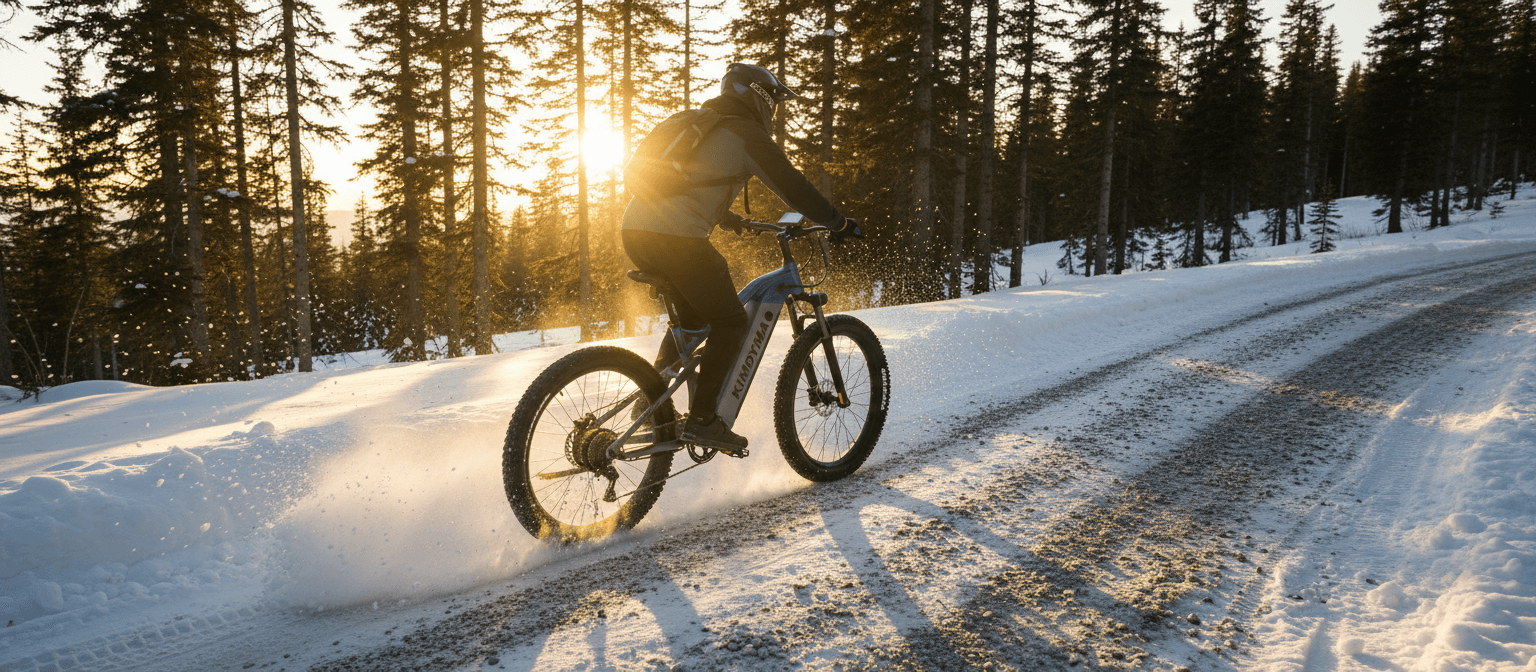
The 48V 20Ah Samsung lithium-ion battery powering the KINDYMA TITAN X and AURORA S represents a total capacity of 960 watt-hours, providing up to 160 km of pedal-assist range under optimal conditions. Winter temperatures can temporarily reduce this capacity, but proper care strategies minimize the impact and protect your investment for years of reliable service.
How Cold Affects Lithium-Ion Battery Performance
Lithium-ion batteries operate through chemical reactions that move ions between electrodes through a gel-like electrolyte. Temperature directly influences the speed and efficiency of these reactions. When temperatures drop, the electrolyte thickens, increasing internal resistance and slowing ion movement.
The optimal operating temperature for lithium-ion batteries falls between 15°C and 35°C. Performance remains strong down to about 5°C, after which riders begin noticing reduced range. At freezing temperatures (0°C), expect approximately 20% less range compared to mild conditions. This reduction is temporary and reverses completely when the battery returns to normal temperatures.
The Samsung 21700 cells used in KINDYMA batteries feature built-in battery management systems that monitor temperature and protect against damage. These cells maintain their rated capacity across thousands of charge cycles when handled correctly, making proper winter care an investment in long-term performance.
Pre-Ride Battery Preparation
The single most effective strategy for maintaining winter range involves starting each ride with a warm battery. Store your battery indoors at room temperature overnight, then install it on your e-bike immediately before departure. A battery stored at 20°C will self-heat during use, maintaining acceptable internal temperatures even when riding through cold air.
The removable battery design on both the TITAN X and AURORA S makes this process simple. The lockable battery housing allows quick removal and installation, taking only seconds to complete. This convenience encourages the indoor storage habit that protects your battery through every winter season.
If your bike must remain outdoors or in an unheated garage, always remove the battery and bring it inside. The aluminum frame and Shimano components handle cold temperatures without issue, but the battery benefits significantly from warmer storage conditions.
Charging Protocols for Cold Weather
Charging a cold lithium-ion battery risks permanent damage through a process called lithium plating. When lithium ions cannot penetrate the cold, rigid electrolyte properly, metallic lithium deposits form on the anode surface. This plating reduces capacity permanently and can create internal short circuit risks.
Never connect your charger to a battery that has been exposed to temperatures below 5°C until it warms naturally to room temperature. This warming process typically requires two to three hours depending on how cold the battery became. Resist the temptation to accelerate warming with direct heat sources, as rapid temperature changes can also stress battery components.
The 54.6V smart charger included with KINDYMA e-bikes operates safely at standard room temperatures. Charging time remains six to eight hours regardless of season when proper temperature protocols are followed. Consider charging during evening hours after the battery has had time to warm following your ride home.
Optimizing Range Through Riding Technique
Your pedaling approach significantly impacts winter range beyond the temperature effects on battery chemistry. Cold conditions often mean wet or slippery surfaces that require gentler acceleration and more conservative speed choices. These adaptations coincidentally align with energy-efficient riding habits.
The five pedal-assist levels available on KINDYMA e-bikes provide flexibility for range optimization. Start your ride using lower assist levels while the battery warms internally. The motor generates heat during operation, which helps maintain battery temperature throughout your journey. Gradually increase assist levels as needed rather than immediately selecting maximum power.
Maintain a steady cadence between 70 and 80 revolutions per minute for optimal motor efficiency. The Shimano 21-speed drivetrain enables you to find the right gear ratio for any terrain while keeping your pedaling rhythm consistent. Avoid the stop-and-start pattern that forces the 500W motor to repeatedly accelerate from standstill, as these power spikes consume significantly more energy than steady-state riding.
The KT-LCD5 display provides real-time feedback on battery status, current power consumption, and remaining capacity. Monitor these readings during cold weather rides to understand how your specific riding conditions affect range. This data helps you plan routes confidently and adjust assist levels proactively.
Understanding Watt-Hours and Range Calculation
Battery capacity measured in watt-hours directly determines potential range. The KINDYMA 48V 20Ah battery stores 960 watt-hours of energy. Under typical riding conditions, e-bikes consume approximately 15 to 25 watt-hours per kilometre depending on terrain, rider weight, speed, and assist level.
Using an average consumption of 20 watt-hours per kilometre, the mathematics suggest a theoretical range of 48 km on motor power alone. When combining motor assistance with pedaling effort in ECO mode, range extends dramatically toward the 160 km maximum specification. Cold weather increases consumption per kilometre, shifting the practical range toward the lower end of this spectrum.
Several factors compound temperature effects on range. Wet winter roads increase rolling resistance. Headwinds require additional motor effort. Heavier winter clothing adds rider weight. Reduced daylight may encourage faster riding to complete routes before dark. Accounting for these variables helps set realistic expectations for winter riding distances.
Long-Term Winter Storage Guidelines
If you plan extended breaks from winter riding, proper battery storage preserves capacity for spring. Store lithium-ion batteries at 40% to 60% charge in a cool, dry location between 10°C and 20°C. Avoid full charge or complete discharge during storage periods, as both extremes accelerate degradation.
Check stored batteries monthly and recharge if the level drops below 30%. The battery management system continues drawing minimal power even when not in use, gradually reducing charge over time. A brief top-up every four to six weeks maintains healthy voltage levels across all cells.
Never store batteries in freezing conditions, near heat sources, or in direct sunlight. The premium Samsung cells in KINDYMA batteries tolerate occasional temperature extremes during use, but prolonged exposure outside recommended storage ranges degrades performance more quickly than regular cycling through charge and discharge.
Practical Cold Weather Accessories
Battery covers and thermal sleeves provide insulation that slows heat loss during winter rides. These neoprene or foam accessories wrap around the battery housing, creating a barrier against cold air. While not essential for moderate winter conditions, covers become valuable for riders in extremely cold climates or those taking extended rides.
The AURORA S step-through frame design allows easy battery access even when wearing bulky winter gloves. The TITAN X high-performance frame positions the battery for straightforward removal regardless of weather gear. Both designs prioritize practical functionality alongside performance.
Consider carrying a small battery percentage in reserve during winter rides. The safety margin accounts for unexpected range reduction and provides peace of mind when exploring new routes. The 960 watt-hour capacity means even conservative usage leaves substantial energy for enjoying your ride rather than anxiously monitoring remaining power.
Motor Efficiency in Cold Conditions
The 48V 500W brushless motor on KINDYMA e-bikes maintains efficiency across a wide temperature range. Unlike batteries, motors actually benefit slightly from cold air that helps dissipate heat generated during operation. The peak output capability of 1000W remains available regardless of ambient temperature.
Motor efficiency depends more on matching assist levels to terrain than on weather conditions. Use lower assist levels on flat sections where human power suffices, saving higher assist for climbs where the 80 Nm torque provides maximum benefit. This selective approach extends range without sacrificing performance when you need it most.
The Shimano M200 hydraulic disc brakes deliver consistent stopping power in cold conditions. Mineral oil in the hydraulic system may become slightly more viscous at low temperatures, but braking performance remains reliable. Squeeze the levers gently a few times before starting your ride to circulate the fluid and restore full responsiveness.
Post-Ride Battery Care
After completing a winter ride, bring your battery indoors promptly but do not charge immediately. Allow the battery to reach room temperature naturally over two to three hours before connecting the charger. This waiting period protects against the lithium plating damage that cold charging causes.
Wipe any moisture or road grime from the battery housing and electrical contacts before bringing it inside. Salt used on winter roads accelerates corrosion on exposed metal surfaces. A quick wipe with a dry cloth prevents contamination of charging connections and maintains reliable electrical contact.
The KINDYMA charger indicates full charge completion with a status light. Disconnect the charger once charging completes rather than leaving batteries connected indefinitely. While modern lithium-ion batteries tolerate connection to smart chargers better than older technologies, disconnecting promotes healthy charge cycling habits.
Planning Winter Routes Effectively
Accept that winter riding typically covers less distance than summer adventures with the same battery charge. Plan routes conservatively, aiming for 70% to 80% of your warm-weather range expectations. This buffer accounts for temperature effects, increased resistance from wet surfaces, and the slower average speeds that winter conditions often require.
The full suspension systems on both the TITAN X and AURORA S absorb impacts from frozen ground and hidden obstacles, but winter terrain demands respect. Choose routes you know well during the coldest months, leaving exploration for milder conditions when range concerns matter less.
Winter riding rewards those who prepare properly. The combination of indoor battery storage, appropriate charging protocols, efficient riding techniques, and realistic route planning transforms cold weather from a barrier into simply another riding condition. Your KINDYMA e-bike delivers reliable performance through every season when you partner with it through thoughtful care.