


Tuning an e-bike to go faster than 25 km/h with pedal assist, or removing its speed limiter, makes it legally a moped in Italy. The bike then needs registration, insurance, a licence and a proper helmet. Beyond the fines and possible seizure, a tuned bike puts extra strain on brakes, tyres and the battery, and insurers may refuse claims after a crash.
What Counts as a Tuned E-Bike, and Why Italy Treats It as a Moped
A tuned e-bike is one whose power or speed has been changed beyond the manufacturer's legal configuration, and in Italy that makes it a moped, not a bicycle. In Italian this is often called a "truccata" bike. Typical changes include removing the speed limiter, raising the assist cut-off, or fitting a bigger controller or motor.
The legal line is simple. A pedelec (short for "pedal electric cycle") is a bike whose motor helps only while you pedal, and which stops helping at 25 km/h, with 250 W nominal power. Regulation 168/2013 is the EU type-approval law for two- and three-wheeled and four-wheeled vehicles. It leaves bikes within those limits outside the motor-vehicle category, which is why they escape registration. The low power and speed are the reason: a vehicle that cannot go much faster than a fit cyclist is treated like a bicycle.
Go past those limits and the exemption no longer applies. The bike is then classed as a moped (a ciclomotore, or motorino), and a moped needs type approval, a registration plate, insurance and a licence for the rider, plus an approved helmet. A bike that was sold as a bicycle will not have any of these, so riding it on the road is treated as using an unregistered, uninsured vehicle.
Per Sempre News reported widespread checks on these bikes, and many of them were being ridden by minors. That matters for anyone buying second-hand: you may inherit a modification you never asked for.
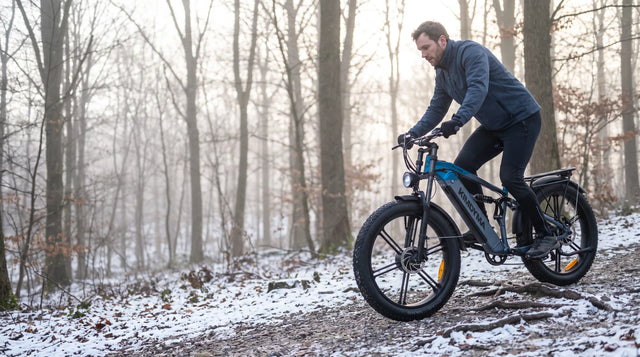
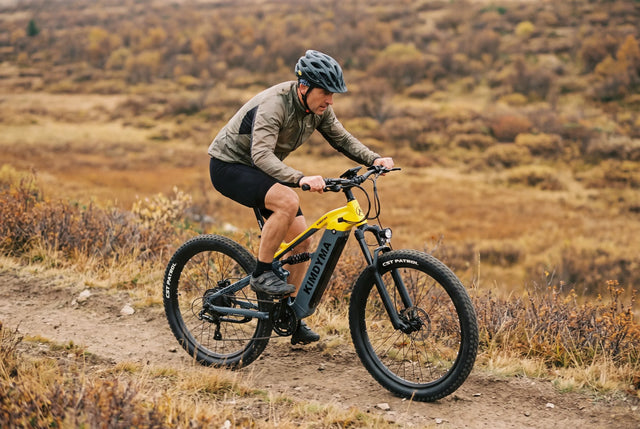
This is a particular concern for off-road riders. A mountain e-bike with a suspension fork and 30% climbing ability is built for torque on steep, loose ground, not for high road speed. Tuning it for speed works against what it was designed to do.

Risk 1: Speed Beyond the Frame, Fork and Brakes Were Designed For
Higher speed lengthens braking distance, and stock brakes are sized for assisted speeds around 25 km/h. This is the core of e-bike braking safety: stopping energy rises faster than speed, so a modest increase asks a lot more of pads, rotors and your hands.
The reason is that kinetic energy is proportional to the square of speed. Going from 25 to 35 km/h is 40% faster, but the energy the brakes must turn into heat is about twice as much (1.4 × 1.4 ≈ 2). With similar braking force, the distance needed to stop also grows roughly in proportion to that energy, so you need close to double the road. An obstacle you would stop short of at 25 km/h can still be hit at real speed from 35.
On descents the problem compounds. The rotors (the metal discs the pads clamp) heat up, and pads fade. Brake fade means the brake overheats and loses friction, so the same lever pull gives less stopping power, or the lever feels spongy. A fork with limited travel can also be overwhelmed by speed on rough ground. Tyres chosen for trail grip may behave unpredictably at speeds they were never rated for.
A practical check before any real ride:
- Find a safe, empty, flat area away from traffic.
- Test brake response and stopping distance from your normal top assisted speed, then compare with what you expect.
- Check for lever pull that feels spongy, noise, or a long distance to stop.
- Inspect pads and rotors for wear before descending anything long.
Risk 2: Battery and Controller Overheating From Unrated Current
Forcing more current through a stock battery and controller raises heat, shortens battery life and increases fire risk. Cells and the BMS are rated for a specific discharge. Exceeding it stresses the pack and, in the worst case, can lead to thermal runaway.
Tuned bikes often draw hard current on climbs, which is exactly when voltage sag and heat are worst. Our articles on battery voltage sag under load and motor overheating on long climbs explain the warning signs. The basics of lithium-ion cells explain why heat is the enemy.
Watch for:
- A swollen or deformed battery casing.
- Connectors that are noticeably hot after a ride.
- Any non-original charger or controller.
- Unusual smells, or a pack that gets hot while charging.
If you need a replacement, use a pack and charger matched to the bike, such as the 48V 20Ah battery with Samsung cells, rather than improvised parts.

Risk 3: Insurance and Liability Can Disappear After a Crash
Many policies exclude modified vehicles or those classed as mopeds, so e-bike insurance after a modification may simply not pay out. If the bike is legally a moped, a standard bicycle or home liability policy is unlikely to respond.
In a collision, civil and even criminal liability can fall on the rider, including for injuries to other people. Without cover, that can mean paying out of your own pocket.
The action is straightforward: before any change to the bike, ask your insurer in writing what they cover. Keep that reply with your bike documents. A verbal assurance from a call centre will not help you after a claim is refused.
Risk 4: Fines, Impoundment and What Happens at a Roadside Check
Police can seize a tuned bike, and fines can reach several thousand euros because multiple offences are often combined. This is where the e-bike speed limit in Italy bites hardest.
A typical bundle includes:
- Using a modified vehicle.
- Riding without the required licence.
- Missing registration and insurance.
- Wearing an incorrect helmet.
Each item is a separate violation with its own penalty, and the amounts are added together rather than merged into one fine. That is how the total climbs into the thousands. I can't give exact figures per item, because they depend on the specific articles applied and on updates to the law, so check the current amounts with the local authority or a lawyer.
Seizure normally follows when the bike is judged to be an unregistered, uninsured moped, since such a vehicle cannot lawfully stay on the road. To get it back, expect to settle the fines, pay the towing and storage costs that accumulate while it is held, and show proof of ownership. In many cases the authorities will also require the bike to be returned to its legal configuration, or may decide on confiscation. Ask the issuing office for the exact procedure and the daily storage charge.
If you are stopped, keep your documents and a record of the stock configuration ready: purchase invoice, manufacturer's specification, and any workshop receipts. A bike that is demonstrably stock is far easier to defend than one you cannot account for. UK riders can compare the approach in the government's e-bike rules, which follow a similar power and speed logic.
Risk 5: Wrong Helmet, No Visibility Upgrades and Riding Unprepared
Higher speeds call for the right helmet and working lights, not just a bicycle-only setup. A standard bicycle helmet is tested for bicycle impact speeds. If your bike is legally a moped, check which standard the rules require and make sure the fit is correct.
Lights and reflectors must stay functional and visible, especially in rain and on dusk routes. A bright front light such as a 400 lm USB-C model and a brake-sensing rear light help others judge your speed. See the general rules on bicycle lighting.
A short pre-ride checklist:
- Brakes: lever feel, pad thickness, rotor condition.
- Tyre pressure suited to the surface.
- Lights and reflectors working.
- Battery seated and locked properly.
- Helmet fitted and fastened.
How to Check Your E-Bike Yourself Before You Ride
Compare your bike's settings and hardware with the manufacturer's documentation; if anything does not match, stop and get it inspected. This is the quickest way to spot tuned e-bike risks, especially on a second-hand purchase.
- Check the speed limit and assist cut-off in the display against the specification sheet.
- Look for unauthorised wiring, unfamiliar plugs or extra modules near the controller.
- Check whether the controller, battery and charger are original or matched parts.
- Note any aftermarket part that changes power delivery.
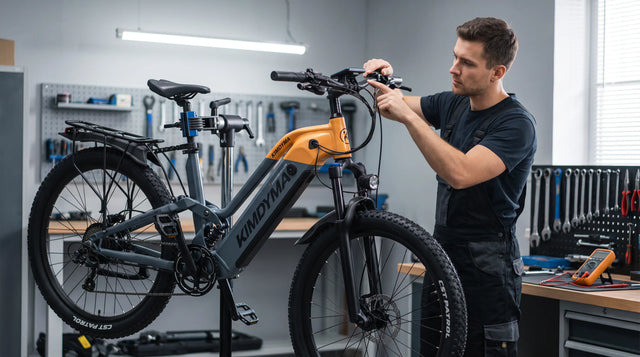
When in doubt, return the bike to a qualified workshop rather than self-tuning. These modified e-bike safety risks are cheaper to avoid than to fix: a stock bike keeps its legal status, its insurance position and its safety margins on the descent.
Frequently Asked Questions
Is it illegal to tune an e-bike in Italy?
Yes. An electric bicycle with pedal assist is legal up to 25 km/h and 250 W nominal power. If the motor assists beyond that, or the speed limiter is removed, the vehicle is legally a moped and must meet moped rules for registration, insurance, licence and helmet. Riding it without these can lead to fines and seizure.
Will my insurance cover a modified e-bike after a crash?
Often not. Many policies exclude vehicles that have been modified or fall outside bicycle classification. Check your policy in writing before making any change. If coverage is refused, you may be personally liable for damage and injuries to others.
How can I tell if my e-bike has been tuned?
Start by checking the speed limit and assist cut-off in the display or app against the manufacturer's specification. Look for unfamiliar wiring, extra plugs or a replaced controller. If you cannot confirm the bike is stock, have a qualified workshop inspect it before riding.
What is the biggest safety risk of a tuned e-bike?
Braking. Stock brakes and tyres are designed for speeds around 25 km/h. Higher speeds increase stopping distance and heat, which can cause brake fade or loss of control on descents. Test your brakes at full speed in a safe area and never assume the bike will stop as it did at the factory setting.