


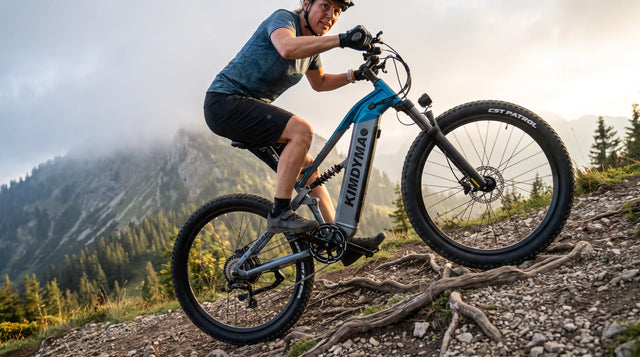
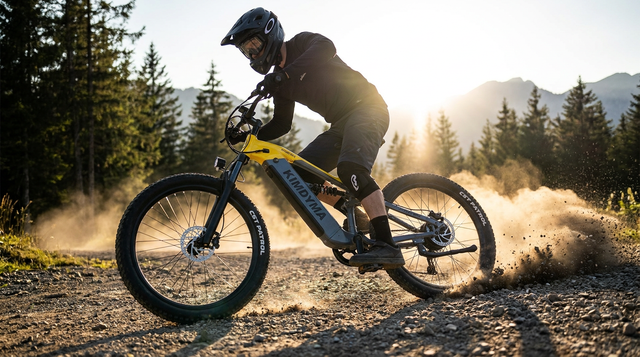
150 Nm torque on a mid-drive motor is 67% stronger than Bosch's 90 Nm standard. On steep hills and from standstill, you'll feel noticeably more push. However, on flat urban commutes below 25 km/h, the difference is subtle. Torque matters most for loaded cargo, heavier riders, and mountainous terrain—not for range or top speed.
What Does Torque Mean on an E-Bike Motor?
Torque is the rotational force that turns your e-bike's wheels, measured in Newton-meters (Nm). It's not the same as speed or power—think of it as the motor's ability to push you forward from a standstill or up a steep incline. A motor with 150 Nm delivers 150 Nm of rotational force at the crank or hub, depending on where it's mounted.
Higher torque means stronger acceleration and better hill-climbing ability. When you're stopped at a traffic light or facing a 10% gradient, mid-drive motor torque determines how much effort the motor contributes before you shift gears or pedal harder. However, torque alone doesn't tell you if a motor is "good"—it depends on where and how that force is applied.
A pedelec system in the EU cuts assistance at 25 km/h regardless of torque. Above that speed, you're pedaling unassisted. This means torque advantages only matter during acceleration and climbing, not cruising on flat roads.

Mid-Drive vs Hub Motor: Where Torque Works Differently
Mid-drive motors apply torque through the bike's chain and gears, which multiplies the force delivered to the rear wheel. When you shift into a lower gear on a hill, the motor's 150 Nm gets amplified by the gear ratio—this is why mid-drives feel stronger on steep climbs than their Nm rating suggests.
Hub motors, by contrast, apply torque directly to the wheel with no gear multiplication. A 150 Nm hub motor delivers exactly 150 Nm at the wheel, regardless of what gear you're in. This makes comparing raw Nm numbers between e-bike mid-drive vs hub motor systems misleading—a 90 Nm mid-drive can outperform a 150 Nm hub motor on a 12% gradient because of mechanical advantage.
The trade-off: mid-drive motors stress the drivetrain more. Chains, cassettes, and derailleurs wear 20–30% faster under high torque, especially if you shift under load. Hub motors are gentler on components because they bypass the chain entirely. If you ride aggressively or carry cargo, budget for chain replacement every 1,500–2,000 km with a mid-drive versus 2,000–3,000 km with a hub system.
| Motor Type | Torque Application | Hill Performance | Drivetrain Wear |
|---|---|---|---|
| Mid-Drive | Through chain and gears | Strong (gear multiplication) | High |
| Hub Motor | Direct to wheel | Moderate (no multiplication) | Low |
How 150 Nm Stacks Up Against Bosch and Other Standards
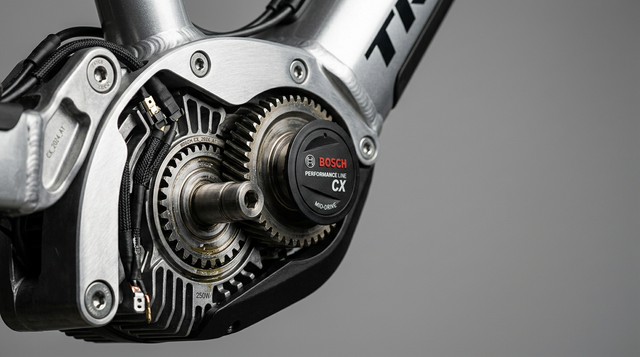
Bosch's Performance Line CX delivers 90 Nm and has been the benchmark for city and mountain e-bikes since 2020. Their Performance Line Speed, designed for road and gravel bikes, outputs 65 Nm. A 150 Nm e-bike motor is 67% more powerful than the CX and over twice the Speed's output—this is a substantial difference on paper.
In practice, the gap matters most on steep terrain. On an 8% gradient with a loaded pannier, a 150 Nm motor lets you maintain 15 km/h in a higher gear than a 90 Nm system would allow. On flat urban roads below 20 km/h, you won't feel the difference—both motors provide more than enough assistance for casual pedaling.
More torque does not equal longer range. A 150 Nm motor drawing full current drains an 800 Wh battery faster than a 90 Nm motor on the same battery. Electric bicycle efficiency depends on how you ride, not just motor specs. If you use maximum assist constantly, expect 40–50 km range in hilly areas; moderate assist can stretch that to 60–70 km.

What 150 Nm Actually Means for Your Commute
On steep hills—8% gradient or higher—you'll notice the difference between 90 Nm and 150 Nm immediately. The higher torque reduces the need to downshift aggressively or stand on the pedals. If your commute includes sustained climbs, this translates to less fatigue and smoother power delivery.
On flat urban routes, the advantage disappears. At 20 km/h on level ground, even a 65 Nm motor provides sufficient assistance for most riders. The extra 60 Nm sits unused because you're not fighting gravity or inertia. This is why what is torque on e-bike matters less for city commuters than for mountain riders or cargo haulers.
Loaded cargo or heavier riders benefit most from high torque. If you weigh 90 kg and carry 15 kg of groceries, a 150 Nm motor reduces strain on both you and the motor itself. The motor doesn't have to work at its thermal limit to maintain speed, which extends its lifespan and keeps it quieter.
Remember: EU pedelec regulations cut motor assistance at 25 km/h. Above that speed, torque is irrelevant—you're pedaling unassisted. The torque advantage only applies during acceleration and climbing below the cutoff speed.
Battery and Motor Pairing: Why 800 Wh Matters With High Torque
Higher torque motors draw more current when you use full assist. A 150 Nm motor paired with a 500 Wh battery will run out faster than a 90 Nm motor on the same battery if you ride aggressively. An 800 Wh battery gives you more margin, but it's not a cure for inefficient riding habits.
Expect 40–60 km range in hilly terrain with an 800 Wh battery and 150 Nm motor, assuming you use high assist modes frequently. On flat roads with moderate assist, that extends to 60–80 km. Compare this to a 90 Nm motor on the same battery: 60–80 km hilly, 80–100 km flat. The difference comes from current draw, not motor size.
A torque sensor helps manage power delivery more efficiently than a cadence sensor. It modulates motor output based on how hard you pedal, rather than just whether you're pedaling. This smooths out power spikes and extends range by 10–15% compared to cadence-only systems.
Throttle use drains batteries quickly regardless of capacity. If you rely on throttle instead of pedaling, even an oversized battery won't compensate. A 960 Wh battery like the 48V 20Ah Samsung cell pack gives you more reserve, but only if you pedal consistently and use assist modes strategically.
Reading Motor Specs: What Else to Check Beyond Torque
Peak torque is what manufacturers advertise; continuous torque is what the motor delivers during normal riding. A motor rated at 150 Nm peak might only sustain 100 Nm continuously. Check the spec sheet for both numbers—if only peak is listed, assume continuous is 20–30% lower.
Motor weight matters for handling. Mid-drive motors add 3–4 kg to the bike's center, which improves balance but makes the bike harder to lift. Hub motors add 2–3 kg to the front or rear wheel, which affects steering feel or rear-end stability. A hub motor in the rear wheel can make the bike feel tail-heavy when climbing out of the saddle.
Efficiency rating, measured in Wh/km, tells you more about real-world range than Nm or watts. A motor that uses 12 Wh/km will drain a 960 Wh battery in 80 km. A less efficient motor at 18 Wh/km drains the same battery in 53 km. This metric accounts for motor design, controller efficiency, and typical riding conditions—it's more useful than torque alone.
Warranty and support infrastructure matter as much as specs. New motor brands with high torque ratings need proven service networks in your region. Check: Can you get replacement parts locally? What's the warranty length—two years or five? Does the brand have authorized repair shops within 50 km of your home? A 150 Nm motor is only useful if you can get it fixed when something breaks.
| Spec | What to Look For | Why It Matters |
|---|---|---|
| Peak vs Continuous Torque | Both numbers listed | Peak is marketing; continuous is daily reality |
| Motor Weight | 3–4 kg mid-drive, 2–3 kg hub | Affects handling and portability |
| Efficiency (Wh/km) | 10–15 Wh/km is good | Predicts real range better than Nm |
| Warranty | 3+ years, local service | High torque means more stress—coverage matters |
Frequently Asked Questions
Is 150 Nm torque better than 90 Nm?
Better for hills and acceleration, yes. But "better" depends on terrain. On flat commutes, 90 Nm is plenty. On 10%+ gradients, 150 Nm reduces motor strain and feels smoother. More torque also drains battery faster if you ride aggressively.
Does high torque mean longer range?
No. Torque affects how hard the motor works, not how far it goes. A 150 Nm motor with an 800 Wh battery will actually have shorter range than a 90 Nm motor on the same battery if you use full power constantly. Efficiency matters more than torque for range.
Why do mid-drive motors have higher torque than hub motors?
Mid-drive torque is multiplied by the bike's gears. A 150 Nm mid-drive at the crank becomes much stronger at the wheel through gear ratios. Hub motors apply torque directly to the wheel, so they need lower Nm to feel similar. Comparing raw Nm numbers between mid-drive and hub is misleading.
Will 150 Nm damage my chain faster?
Yes, higher torque stresses the drivetrain more, especially under load or on rough terrain. Mid-drive motors wear chains 20–30% faster than hub motors. Budget for chain replacement every 1,500–2,000 km instead of 2,000–3,000 km with lower-torque systems.
Is a new motor brand with 150 Nm as reliable as Bosch?
Reliability depends on engineering and warranty support, not torque alone. Check: Does the brand have a service network in your country? What's the warranty length? Are replacement parts available? High torque is only useful if the motor lasts and you can get it fixed.