


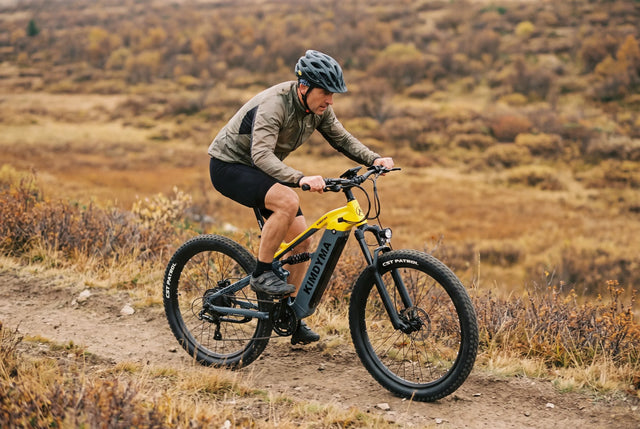
Lock out the suspension on smooth, non-technical climbs, long fire roads and flat transfers, where it reduces bob and wasted pedal energy. Keep it open on rocky, rooted or loose climbs, where the wheel needs to follow the ground for grip, and always open it fully before a descent. Use an intermediate setting when terrain is mixed.
How Suspension Lockout Works: What Actually Changes When You Flip the Switch
A lockout is a valve that stops oil from flowing through the damper, so the fork or shock cannot compress under normal loads. Open, the suspension moves freely. Locked, it behaves almost like a rigid part. Here is the chain of parts, one step at a time.
First, a few terms. Travel is the distance the fork or shock can compress; the K01 and K02 forks have 150 mm. The damper is the oil-filled cartridge that controls how fast the suspension moves. It works by forcing oil through small openings, and the narrower the opening, the slower the oil flows and the slower the suspension moves. Compression is the suspension squashing when you hit a bump or push on the pedals, and compression damping controls how quickly that happens. Rebound is the return stroke, when the compressed spring pushes back out. Rebound damping restricts the oil on that return trip, so a tighter setting makes the suspension come back slowly instead of springing back and bouncing. Preload is how much the spring is already compressed while the bike is standing still. More preload means the spring starts out tighter, so it takes more force to get the suspension moving, and the bike sits higher in its travel. That is linked to sag, the amount the suspension sinks under your weight when you sit on the bike. On the K01, K02 and K03, rebound damping, preload and lockout are all adjustable.
When you flip the lockout, the valve closes the oil passage that compression would normally push through. The spring can no longer be squashed in any meaningful way, because the oil has nowhere to go. You feel this as a firmer, more direct front end and almost no movement from the shock under the saddle.
Three places the control can sit
- Switch on the fork leg or shock body: simple and common on entry-level bikes. You must take a hand off the bar to use it, so it is best flipped on a smooth stretch.
- Remote lever on the handlebar: works like a gear shifter. You change setting without letting go, so you will actually use it more often.
- Twist grip (TwistLoc style): a grip you rotate, similar to a grip shifter, which also keeps the cockpit tidy.
Two positions or three?
A two-position control is open or locked. A three-position control adds a middle setting, often called intermediate or traction mode. In it the suspension stays active but uses only part of its travel, firm enough to resist pedal bob and soft enough to let the wheel follow small bumps.
On a full-suspension e-MTB, the rear shock matters most for pedalling efficiency, because that is where pedal force makes the bike bob. The front fork matters more for traction and steering control. On some bikes one lever locks both at once; on others only the fork or only the shock can be locked.

Why Lockout Helps on Climbs: Pedal Efficiency and Where the Energy Goes
Lockout helps because an open shock soaks up some of your pedal force as movement instead of forward drive. Each pedal stroke pushes the rear wheel forward and also squashes the shock a little. That squashing is bob, and the energy spent on it never reaches the ground. With the shock locked, more of the force turns the wheel.
Why does squashing a spring waste energy? Two things happen. First, the oil is forced through narrow valves in the damper, and that resistance turns movement into heat, which is simply lost. Second, the spring stores some energy as it compresses and then releases it on the way back, but it gives that energy back at the wrong moment and in the wrong direction, so it does not push the wheel forward. A simple comparison: pedalling with an open shock is a bit like pushing off a sponge, while a locked shock is like pushing off a wooden board. The sponge gives way under you, and part of your effort goes into squeezing it.
The same logic applies to e-bike climbing suspension. A motor adds power, but the pedal force you add still makes the frame move, and a firm setup keeps the bike feeling direct. This is most noticeable on smooth, steady climbs and when you stand up and sprint for a short pitch. On a smooth climb you can often see and feel the bob in the shock at every pedal stroke, and that is the loss lockout removes.
The trade-off is real. A locked fork and shock cannot follow the ground, so the bike feels harsh and the tyre can skip over bumps instead of gripping. On technical ascents the gain is smaller than many riders expect, because grip matters more than a bit of lost pedal energy.
Published tests also disagree on how many seconds lockout saves, so do not chase a single number. Judge it by feel and by the surface under your wheels.
When to Lock Out: Smooth Fire Roads, Long Climbs and Flat Sections
Lock out when the surface is smooth enough that the suspension has little to do. This is the core of when to lock out fork and shock.
- Long, non-technical climbs: hard-packed gravel, forest roads and smooth singletrack where bumps are few. A firm bike wastes less effort over a long grind.
- Flat or rolling transfers and road sections: bob is most annoying at a steady cadence on smooth ground, and lockout removes it.
Avoid locking out on a steep, technical climb. When the rear wheel hits a root or rock with no suspension movement, it bounces off instead of rolling over, loses traction and spins. On loose, steep ground that can stop the climb entirely.
How to judge whether your surface is smooth enough
Use a quick check before you flip the switch:
- Look ahead. If you can see loose stones, exposed roots, ruts or washboard ripples in the next stretch, leave the suspension open. Smooth means the surface looks even and firm, with nothing bigger than the odd tiny pebble.
- Feel the bars. If your hands pick up constant buzz or repeated jolts while the suspension is open, the ground is too rough to lock out.
- Test it. Try the locked setting for a short stretch. If the bike feels harsh or the wheel starts skipping sideways, open it again.
With the fork locked, even a small stone sends a sharp knock straight into your hands and the front wheel can be deflected instead of rolling over it. That is why a surface that looks fine can still feel wrong when locked.

When to Keep It Open: Rocky Climbs, Roots and Anything Technical
Keep the suspension open whenever the wheel needs to follow the ground to keep grip. Rocky, rooty or loose climbs are the clearest case. An active shock lets the rear tyre stay in contact with the surface, so the motor's power turns into traction rather than wheelspin.
A locked fork also causes problems at low speed. It deflects off obstacles instead of absorbing them, and your front wheel can get knocked off line, which reduces steering control exactly when you are climbing slowly and need precision.
The intermediate setting is the compromise for mixed terrain: a smooth fire road that turns into a rutted section, for example. It is worth switching only if the terrain stays consistent for a while; flipping back and forth every few seconds is not practical.
On any descent, the suspension must be fully open. A locked suspension cannot absorb impacts, which hurts braking stability and comfort. If the trail turns downhill, reopen it before you commit. For protection on rough descents, see our guide to choosing e-MTB knee pads.
Common Mistakes Riders Make With Lockout on an E-MTB
The most common mistake is treating lockout as a default instead of a tool for specific terrain. Four habits come up again and again:
- Leaving it locked all the time. The bike then feels harsh on rough sections and tires you out. Lockout is for smooth ground only.
- Assuming a locked fork is always right on a climb. On loose or rooty ground it costs traction and control.
- Forgetting to reopen before a descent. A rigid bike on a rough downhill is uncomfortable and reduces braking stability.
- Ignoring sag and rebound. Sag is how far the suspension sinks under your weight when you sit on the bike. If it is set badly, or rebound is too fast or slow, the open setting feels wrong and the lockout feels like a bigger change than it should. Set these first, then decide your lockout strategy.
How to check your sag
- Put the suspension in the open position and dress as you would to ride, with helmet and pack.
- Slide a small rubber ring or cable tie onto the fork stanchion or shock shaft and push it down against the seal.
- Climb on carefully, settle into your normal riding position without bouncing, then step off without compressing the suspension again.
- Measure how far the ring has moved, and compare it with the total travel. A common starting point is roughly a quarter to a third of the travel, but check the fork or shock maker's guidance for your bike.
If sag is too large, the bike sits low in its travel. Pedalling feels wallowy, the suspension bobs and the rear wheel can slip on climbs. If sag is too small, the suspension is too stiff to move, so the bike feels bumpy, the wheels skip and grip suffers. Adjust preload (or air pressure) until sag is in range, then tune rebound.
Motor choice also changes how much you need the suspension to work. If you are weighing up systems, our e-MTB motor guide explains how torque and range differ between types.
How to Set Up Your Lockout Strategy: A Trail-Side Checklist
A good e-MTB climbing setup is decided before the ride, not halfway up the hill. Work through these steps in order.
- Find the control. Check whether yours is on the fork leg, the shock, a bar lever or a twist grip. Practise flipping it on a flat, safe stretch so you can do it without looking.
- Pick a default for the terrain. Smooth climb: locked. Technical climb: open. Descent: open. Mixed: intermediate, if you have it.
- Check tyre pressure. It strongly affects grip and comfort, and it changes how harsh a locked bike feels. Stay within these ranges: K01 and K02, 1.4–2.4 bar; M1, 1.7–2.8 bar; K03 and K05, 0.7–1.7 bar. Never exceed the maximum printed on the sidewall.
- Confirm rebound and preload. Set them before ride day, so the open setting is predictable and the lockout does not feel like a surprise.
- Test on a short climb. Ride the same hill locked and open. Notice where you lose grip or feel bob, and where the change genuinely helps.
On a first ride in unfamiliar mountains, look at the surface rather than the gradient: hard-packed or loose, smooth or rooty. Our article on choosing trails in wet autumn forest covers how wet ground changes grip.
Finally, remember that e-bikes in the EU are pedelecs, with assist that stops at a legal speed limit; the Pedelec category defines this. Your lockout choice does not change that, but it does change how well your power reaches the ground.
Frequently Asked Questions
Should I lock out my e-MTB suspension when climbing?
Lock it out on smooth, steady climbs such as fire roads and hard-packed gravel, where bumps are few. Keep it open on rocky, rooty or loose climbs, because the wheel needs to track the ground to keep grip. If the terrain changes mid-climb, switch to the intermediate setting if your bike has one.
Does suspension lockout make climbing faster?
It can reduce energy lost to suspension bob on smooth climbs, so more pedal power goes into forward motion. The gain depends heavily on terrain and riding style, and published tests disagree on the size of the effect. On technical climbs it can slow you down by costing traction.
Should I open my suspension before going downhill?
Yes. Open the fork and shock fully before any descent. A locked suspension cannot absorb impacts, which reduces control and comfort on rough trail.
What is the intermediate or traction setting on an e-MTB?
It is a middle position on some forks and shocks that allows partial movement, using only part of the available travel. It suits mixed terrain, where you want some efficiency on smoother sections without losing all the grip and comfort of an open suspension.