


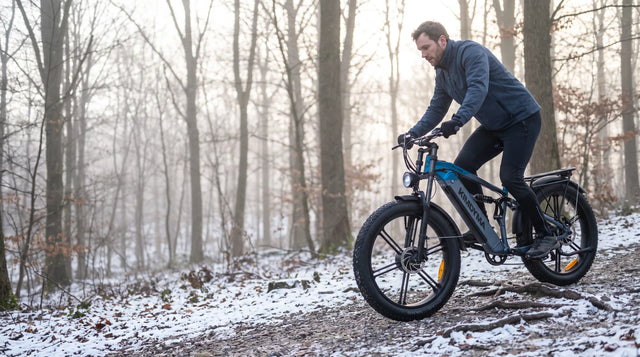
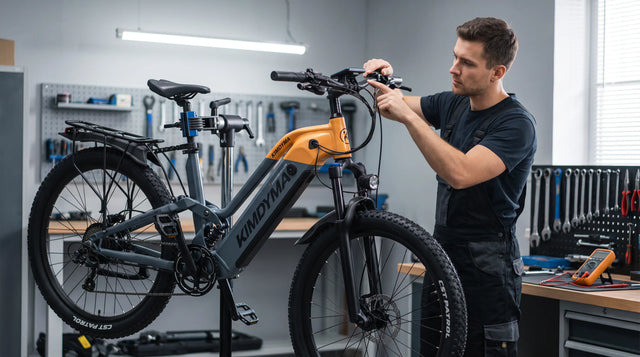
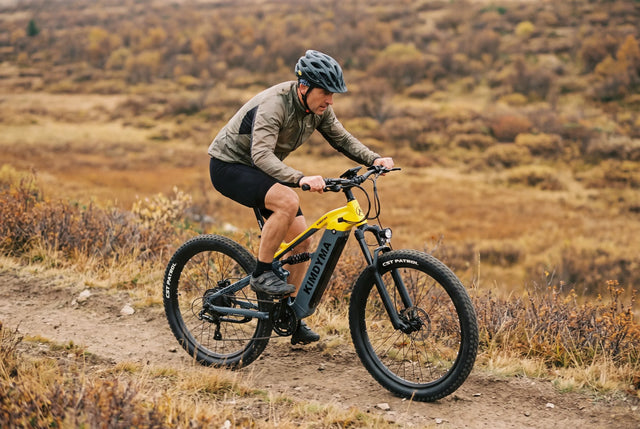
Winter cuts e-bike range mainly because cold temporarily reduces usable battery capacity, with roughly 10% lost near 10°C and around 20% near freezing. Most of the rest of the loss comes from habits: staying in high assist, accelerating hard from every stop, and charging or storing a cold battery carelessly. Riding in lower assist, charging the battery indoors near room temperature, and storing it at around half charge recovers much of the range you thought you had lost.
How Much Range Does Cold Weather Really Cost?
Cold costs you a noticeable but mostly temporary slice of range. As a rough guide from ANWB figures, expect around 10% less near 10°C and around 20% less near freezing. Treat these as a starting point, not a promise. Your own loss depends on terrain, assist level, tyres and battery age.
The reason is chemistry. In a lithium-ion battery, the reactions slow down and internal resistance rises when cells are cold. The pack cannot deliver all of its energy at a useful voltage, so the display drops faster and the motor may cut out earlier. Once the cells warm up, most of that capacity comes back.
This matters more on the kind of riding you do. A bike rated for a long range on a mild day will deliver clearly less on a January forest climb, because steep ground, loose surfaces and cold all hit at once. If you want to understand why the battery feels weak right when you lean on it, see our piece on voltage sag under load on steep climbs.
A practical rule: plan winter rides with a generous reserve. If a route normally uses most of your battery in summer, shorten it or carry a spare pack in winter.

Which Riding Habits Waste the Most Kilometres?
Four habits do most of the damage: too much assist, hard starts, over-using high assist on climbs, and neglected tyre pressure. All of them are fixable without buying anything. Together they often cost more range than the cold itself.
- Staying in the highest assist mode on easy ground. On flat or gentle sections, drop to a low level. Save the strong assist for the sections that need it.
- Accelerating hard from every stop. Pulling away at full assist is one of the most energy-hungry moments of a ride. Start in a light gear, spin up smoothly and let assist top up your effort rather than replace it.
- Using high assist on every climb. Many climbs can be done in a lower level with steady pedalling and a sensible gear. Reserve the top level for the steepest pitches.
- Ignoring tyre pressure. Cold air lowers tyre pressure, and soft tyres add rolling resistance on gravel and wet tracks. Check pressure more often in winter, and adjust for grip on frozen or slushy ground rather than just running them hard.
Three more habits are worth adding to your list, because they quietly cut e-bike range in cold conditions:
- Starting a ride with a cold battery that has sat overnight in the garage.
- Dragging brakes or a dirty drivetrain. Grit and slush add friction you pay for in watt-hours.
- Riding fast into headwinds instead of easing off and keeping a steady cadence.
Good visibility also matters on short winter days, so it is worth checking your lighting setup before you plan late-afternoon loops.
How Should You Charge and Store the Battery in Winter?
Charge indoors at near room temperature, avoid full discharge, and store the pack at around half charge in a frost-free place. These e-bike battery charging habits protect the cells far more than any gadget does. They also help your e-bike battery in cold weather deliver its full capacity when you head out.
Before and after a ride
- Bring the battery indoors after a cold ride and let it warm up before charging. Charging very cold cells is harder on them: at low temperatures, lithium can build up as metal on the negative electrode instead of slotting into it properly, which causes permanent capacity loss. Wait until the pack has come close to room temperature, and do not charge it while it is still near freezing.
- Charge before you ride, so the pack starts closer to room temperature, rather than leaving it fully charged in a cold shed.
- Do not run the battery down to zero. Deep discharge is stressful, especially in the cold.
Where it should sleep
For e-bike battery winter storage, pick a cool, dry spot indoors. Avoid unheated sheds, garages and cars during frost. Keep the charge around half, which is gentler on the cells than storing full or empty. Both extremes speed up ageing: a full pack keeps the electrodes under high stress, and an empty one risks deep discharge damage. Around half, the stress on the electrodes is at its lowest. You can read more in our guide to charging and storing for a longer battery life.
Charger habits
Do not leave the charger connected for days after the pack is full. Use the charger intended for your model, and keep it away from flammable clutter. For general safety on charging, the NFPA guidance on lithium-ion batteries is a sensible reference, and the mechanism behind battery fires is explained under thermal runaway. If your battery is swollen, hot, or smells odd, stop using it.
Keep the charge level in mind too: a pack's state of charge is what you are managing when you aim for that half-full storage level.

What Checks Stop Hidden Range Loss Before It Starts?
Three quick checks catch most hidden problems: the display, the contacts and the pack's behaviour once warm. Do them every few weeks in winter, and always after rain, slush or washing the bike.
- Display. Look at any battery health reading and for error codes after wet rides. A new error after washing often points to moisture at a connector.
- Contacts and connectors. Clean battery contacts and the mount with a dry cloth. Look for corrosion, bent pins or road salt residue, and make sure the pack seats firmly and the key lock engages.
- Behaviour when warm. Note how the battery performs once it has warmed up indoors. This is how you separate cold from age.
The comparison below helps you tell the two apart.
| Symptom | Likely cause | What to do |
|---|---|---|
| Range drops in the cold, returns when warm | Cold-affected capacity | Warm the pack, ride in lower assist |
| Poor range in every season | Ageing battery | Check health reading, consider replacing |
| Sudden cutouts after wet rides | Moisture or dirty contacts | Dry and clean connectors |
| Swelling, heat or odd smell | Damaged cells | Stop using it and seek advice |
If the bike feels weak on climbs but the battery seems fine, a worn component may be involved. On K01 and K02 models, the torque sensor spare part is one thing to check with support.
When Is Replacing the Battery the Better Option?
Replace the battery when it has lost meaningful capacity in all conditions, not just in winter. If a warm, fully charged pack still gives a fraction of its old range, no riding habit will fix that. Batteries age with cycles and time, and winter simply makes the weakness obvious. As a rough guide, a lithium battery handles a few hundred full charge cycles, which often means two to three years of regular use before capacity clearly drops. A pack that has fallen to roughly 70–80% of its original capacity is usually considered due for replacement.
To estimate where yours stands, compare your range on a mild day with what you got when the bike was new. If your display shows battery health or a charge count, use that. Otherwise, count roughly how many times you have charged it from low levels: two partial charges count as about one full cycle.
Signs it is time:
- Range is poor in mild weather as well as cold.
- The pack drops quickly under load, even when warm and charged.
- The bike cuts out on climbs it used to handle easily.
- Visible damage, swelling or repeated errors after you have cleaned the contacts.
When choosing a replacement, match the voltage and the connector to your model. Do not guess, and do not use mismatched packs or chargers. Also keep to a compatible charger for the pack you buy; for Kimdyma bikes, the 48V 4A charger is made to fit the K01, K02 and K03.
For longer winter tours in the hills, a removable 48V 20Ah pack with a key lock can work as an upgrade or a spare. A second pack gives you a reserve for cold days and a way to rotate batteries, and removable packs are easier to bring indoors. If you are weighing your options, it is also worth reading about choosing winter routes that suit your battery.
Frequently Asked Questions
How much range do you lose in cold weather?
As a rough guide, e-bike range can drop about 10% near 10°C and around 20% near freezing. Hilly terrain, high assist use and rough surfaces can push the loss higher. The effect is largely temporary: capacity recovers as the battery warms up.
Should I charge my e-bike battery in winter if it is cold?
Yes, but bring it indoors first and let it reach near room temperature before charging. Charging a very cold battery is harder on the cells, so warming it up beforehand is the safer and more effective approach.
How should I store an e-bike battery over winter?
Store it indoors in a cool, dry place, not in an unheated shed or car during frost. Keep the charge at around half rather than full or empty, and avoid letting it discharge fully over long periods.
Is my e-bike battery dying or just affected by cold?
If range is poor in every condition, including warm weather, the battery is probably ageing. If range recovers when the battery warms up, cold is the main cause. Checking the battery health reading on the display helps tell the two apart.