


For steep, technical climbing and long rides, a mid-drive motor is generally the better choice: it uses the bike's gears to keep the motor in its efficient range on grades up to around 30–35%, and it centralises weight for better handling. A hub motor is simpler and cheaper to build, and works well on flatter or moderate terrain, but it can overheat and lose efficiency on sustained climbs and puts extra weight on the rear wheel.
How the two motor types actually differ
The core difference is where the motor sits and what it pushes against. A mid-drive motor is mounted at the bottom bracket and drives the chain, so its output passes through the cassette and your gear selection. A hub motor sits inside the rear (or front) wheel and turns it directly, independent of the drivetrain.
That position changes how power reaches the trail. Torque is simply turning force, the twisting effort that gets a wheel or crank moving. With a mid-drive, the motor's torque is multiplied by whatever gear you choose, much like your own leg power. With a hub motor, torque goes straight to the wheel at a fixed ratio, so the gears do not help it.
The sensing logic also differs. A sensor tells the motor when and how much to help. A torque sensor measures how hard you press on the pedals, while a cadence sensor only detects that the pedals are turning. Mid-drive systems commonly read pedal force with a torque sensor at the crank, so assistance follows how hard you push. Hub-motor bikes often use a cadence sensor, which detects pedalling movement but not effort, though some use torque sensing as well. Check which your bike has, because it shapes how natural the assistance feels on technical ground.
"Pedelec" is the EU's legal category for electric bikes that assist only while you pedal. Both layouts fall under the same pedelec category when they meet the assistance limits. These limits usually mean the motor stops helping above a top assisted speed (commonly 25 km/h) and stays under a rated power cap. The choice is therefore about riding, not registration.

Which motor climbs steep trails better?
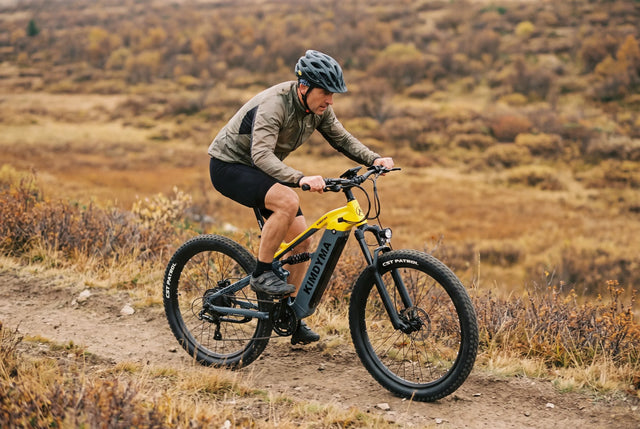
For steep or long climbs, mid-drive is the stronger choice. Because it works through the gears, a mid-drive motor can stay in its efficient range while you drop to an easy gear and keep a steady cadence. That is why mid-drive motor climbing holds up well on grades in the 25-35% range, which is where the Kimdyma K01, K02 and K03 are rated to climb.
A hub motor has no gearing help. On a long, steep ascent it can be pulled down to low wheel speed under heavy load, which is where efficiency drops and heat builds up. Pacing matters: shorter pitches and moderate hills are fine, but a sustained grind can lead to overheating and reduced assistance.
Why torque figures mislead
Comparing e-MTB motor torque by the Nm number alone does not tell you much. It says nothing about how long the motor can sustain that output, how it handles heat, or how the gearing turns it into traction. Look at how power is delivered under load, not only the headline figure. For a deeper look, see our e-MTB motor guide on torque, range and reliability.
A simple example: a motor may list a high peak torque, but that is only what it can produce for a moment. On a ten-minute climb it heats up, and to protect itself it cuts its output. A motor with a lower headline number but better cooling can hold its output the whole way up and be the faster climber.
Gearing matters in the same way. A mid-drive in an easy gear lets the motor spin at the speed where it works efficiently, and the gear ratio turns that into strong force at the rear tyre. A motor forced to crawl at low speed loses efficiency and makes more heat. So when comparing, look at sustained power and the cooling design first, and treat peak Nm as a secondary detail.
What each layout handles comfortably
- Mid-drive: steep, technical and long climbs, loaded rides, repeated ascents in one outing.
- Hub motor: gentle to moderate hills, shorter climbs, forest roads and flatter gravel.
Dual-motor setups such as the K03 RANGER are a different approach, spreading load across two motors for heavier riders and cargo, and reaching the steepest rated grade in our range.
Weight distribution and handling on rough terrain
Mid-drive keeps weight low and central, which helps steering and traction. On a technical climb, a centred mass lets the front wheel stay planted and the rear wheel keep load on the tyre. The bike behaves more like a conventional mountain bike.
A hub motor adds mass to the rear wheel. That is unsprung weight: the weight of everything below the suspension that the spring does not support, such as the wheels, tyres and brakes. The heavier this is, the harder it is for the wheel to move up and down quickly with the ground. Over roots and rocks, the suspension and tyre have more to control, so the wheel is slower to drop back into dips and tends to bounce or skip. Grip and shock absorption both suffer. On loose gravel the rear can feel heavier and less lively, and on steep descents the balance sits further back.
Suspension and wheel choice
Your setup can offset some of this. With a hub motor, spend time on fork and tyre pressure so the wheels follow the ground, and consider how your tyre choice affects grip. Our guide to tubeless versus tube tyres on e-MTBs covers pressure and puncture risk. On forest roads and gravel, a front fork with adjustable damping helps keep the front end tracking while the rear carries the extra weight.

Maintenance, wear and repair in the field
Mid-drive wear sits in familiar, cheap parts; hub motor wear sits in the wheel. Hub motor maintenance focuses on wheel bearings, spokes and rear tyre changes. Mid-drive wear concentrates on the chain, cassette and chainring, which any bike shop can replace.
- Mid-drive: clean and lubricate the chain more often, especially after mud, sand or wet gravel. Check chain stretch, since a worn chain accelerates wear on the cassette and chainring. A gearbox alternative is covered in our Pinion versus derailleur comparison.
- Hub motor: inspect spoke tension and bearing play, and keep the motor cable and connector clean and protected.
Chain stretch does not mean the metal itself gets longer. The pins and bushings inside the links wear down, which opens up small gaps and makes the whole chain longer. A stretched chain no longer meshes properly with the teeth, so it wears them quickly. Measure it with a chain checker tool. A common rule of thumb is to replace the chain at about 0.5% stretch, and at 0.75% at the latest, before the cassette and chainring are damaged.
Fixing a flat on the trail
This is where the layouts differ most. Removing a hub-motor wheel means dealing with the motor cable and connector, and the wheel is heavier and fiddlier to refit. With a mid-drive, the wheels come off like those of a standard bike. If you ride far from help, carry the right tools and consider tubeless tyres to reduce flats.
Which layout should you choose for your riding?
If your rides involve steep, technical or long climbs, make mid-drive your default. It uses gearing to protect the motor, and keeps handling closer to a regular mountain bike.
A hub motor can be enough if you ride mostly flat or moderate terrain and want a simpler, lower-cost build. Be honest about its limits: expect less efficiency on sustained steep climbs and a heavier-feeling rear wheel.
A quick decision checklist
- Terrain grade: regularly above moderate slopes points to mid-drive.
- Ride length: long climbs raise the risk of heat build-up on a hub motor.
- Load: heavy riders or cargo need strong, sustained output; consider a dual-motor design.
- Maintenance tolerance: are you comfortable cleaning a chain regularly, or would you rather avoid drivetrain upkeep?
| Factor | Mid-drive | Hub motor |
|---|---|---|
| Steep climbing | Strong, uses gears | Best on moderate grades |
| Weight position | Low and central | On the wheel |
| Main wear parts | Chain, cassette, chainring | Bearings, spokes |
| Flat repair | Standard wheel removal | More involved |
Whichever you choose, look after the battery too. Heat and charging habits affect its life, and our 48V 20Ah removable battery is one option if you need extra range for long climbs.
Frequently Asked Questions
Is a mid-drive motor better than a hub motor for climbing?
Usually, yes, on steep or long climbs. A mid-drive motor works through the bike's gears, so it can stay in its efficient power band on grades of 25-35%. A hub motor has no gearing assistance and tends to lose efficiency and heat up on sustained climbs, so it suits gentler, shorter hills better.
Which motor is easier to maintain on the trail?
A mid-drive motor's wear points are the chain, cassette and chainring, which are inexpensive and easy to swap. A hub motor's wear points are the wheel bearings and spokes, and removing a hub-motor wheel for a flat is more involved than a standard wheel change.
Does a hub motor affect handling on rough terrain?
Yes. Because a hub motor adds weight to the rear wheel, it shifts the bike's balance backward and can change rear grip on loose gravel, roots and steep descents. A mid-drive motor sits low and central, keeping weight distribution closer to a conventional bike.
Are torque figures enough to compare two e-MTB motors?
No. A high Nm number does not tell you how the power is delivered under load, how long the motor sustains it, or how it manages heat. Compare the climbing grade, ride length and how the drive system is geared, not the torque figure alone.