


Automakers like Volkswagen are entering the e-bike market with premium models (€2,500–€4,000) built on proven EV battery and motor tech. This adds choice and dealer service networks, but won't immediately lower prices or disrupt the €1,500–€2,500 mainstream segment. The real impact: e-bikes shift from niche to mainstream appliance, and regulatory compliance becomes a competitive advantage. Independent brands keep winning on customization and repairability.
Why Automakers Are Suddenly Serious About E-Bikes
Car manufacturers entering e-bike market signals a fundamental shift in how mobility companies view the last-mile commute. Volkswagen's 2026 lineup debut at IFA is not an experiment—it's a strategic bet that e-bikes are now core transport infrastructure, not hobby products. The logic is straightforward: urban car sales are declining across Europe while e-bike adoption climbs year over year. Automakers are following the market, not creating it.
What makes this move credible is that automakers already own the supply chain. Battery chemistry, motor controllers, and charging electronics transfer directly from EV divisions to e-bikes. A company that manufactures lithium-ion battery packs for electric cars can apply the same quality gates, thermal management, and safety protocols to a 48V e-bike battery. This is not improvisation; it's replication of proven processes.
The EU policy backdrop matters too. Cities from Amsterdam to Berlin are expanding cycling infrastructure and restricting car access to congested zones. Automakers see e-bikes as a way to retain customer relationships in a shrinking car market—sell them an e-bike today, potentially a small EV tomorrow. The dealer network already exists; the only question is what to stock on the showroom floor.

What Automakers Actually Bring to the E-Bike Market
Automakers enter with three concrete advantages: quality control infrastructure, proven battery and motor technology, and established service networks. These matter, but they're not magic.
Battery management is the first differentiator. Automotive-grade battery management systems (BMS) monitor cell voltage, temperature, and charge cycles with precision. A car BMS prevents thermal runaway—the cascade failure that leads to battery fires. Automakers apply the same logic to e-bikes, often with redundant safety layers. For a commuter, this means a battery that won't fail unexpectedly after two years.
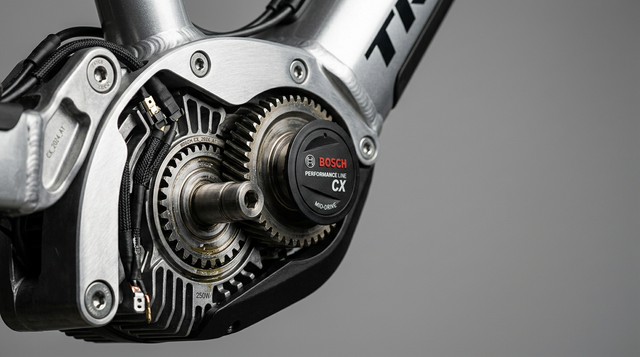
Motor tuning is where automakers sometimes over-deliver. Their mid-drive and hub motors are engineered to precise specifications, with minimal vibration and noise. But here's the catch: EU law caps e-bikes at 250W and 25 km/h pedal assistance. Automakers often design motors that could exceed these limits, then software-limit them. This adds cost without benefit in Europe—though it does enable market variants for countries with higher power ceilings.
Dealer networks are a real win for service. An independent e-bike brand might have one repair shop per city; a major automaker has dozens. If your motor fails under warranty, you can walk into a dealer and get it handled. For commuters who value convenience over customization, this is valuable. For cyclists who like swapping parts and tuning their own bikes, it's irrelevant—they'll buy from indie brands with modular, user-serviceable designs.
Design language is where automakers stumble. Car design principles—heavy use of plastic cladding, integrated electronics, sealed components—don't always translate to bicycles. Cyclists want lightweight frames, easy battery removal, and visible mechanical parts. Automakers often deliver the opposite: sleek but hard to repair, premium-looking but not necessarily practical.
The Price Pressure: Will E-Bikes Get Cheaper?
The short answer: not yet, and probably not in 2026. Volkswagen's early models start at €2,500–€4,000, positioning them firmly in the premium segment. Independent brands still dominate the €1,500–€2,500 sweet spot where most European commuters actually shop.
Mass production could theoretically lower component costs—economies of scale work. But automakers typically price for brand value and warranty, not undercut. A Volkswagen e-bike carries the Volkswagen brand premium, just like a Volkswagen car does. They're not racing to the bottom; they're racing to establish credibility in a new category.
The real competition happens in the mid-range. As automakers scale production, they may pressure indie brands to justify prices above €2,500. Some will consolidate; others will specialize in niches (cargo, mountain, ultra-light). But the budget segment—€800–€1,500 entry-level e-bikes—stays largely untouched. Automakers have no incentive to compete there.
What does shift is choice. A commuter in Munich in 2026 can now walk into a VW dealer and test-ride an automaker e-bike, then visit a local indie brand shop and compare. More choice usually means better value, even if headline prices don't drop immediately.

Technology: Where Automakers Lead (and Where They Don't)
Automakers bring automotive-grade reliability to battery management and motor control. Their systems are often oversized for e-bike duty—a BMS designed for a 60 kWh car battery brings unnecessary complexity to a 1 kWh e-bike battery—but oversizing means margin for error and longer lifespan.
Over-the-air (OTA) software updates are genuinely new to e-bikes. An automaker can push a firmware update to your e-bike to adjust power delivery, fix bugs, or ensure compliance with new regulations in different EU countries. Independent brands rarely offer this. For a commuter who travels between countries or faces changing local rules, OTA capability is useful. For a casual rider, it's a nice-to-have.
Motor tuning reveals the gap between automotive thinking and cycling needs. Automakers design motors with high torque and smooth power delivery—great for hauling cargo or climbing steep hills. But EU law limits pedelec assistance to 250W and 25 km/h. Independent brands often hit this ceiling more efficiently, using lighter motors and simpler controllers. The result: indie e-bikes feel more responsive, automaker e-bikes feel more powerful (even though they're legally identical).
Repairability is where automakers lose ground. A modular indie e-bike lets you swap a worn motor or replace battery cells. An automaker e-bike often requires dealer service for anything beyond tire changes. This matters for cyclists who keep their bikes five years or longer—and in Europe, many do.
What This Means for Your Next E-Bike Purchase
If you're shopping in 2026, you have more options but not necessarily lower prices. Here's how to think about it:
- Commuters who want car-level reliability and warranty: Automaker e-bikes suit you. You get automotive-grade battery management, dealer service, and a brand you already trust. Trade-off: less customization, higher price, dealer-dependent repairs.
- Cyclists who want customization and repairability: Independent brands still win. You get modular components, easier repairs, and designs optimized for cycling, not cars. Trade-off: smaller service networks, shorter warranties on average.
- Budget-conscious commuters: Nothing changes. The €1,500–€2,500 segment remains indie-dominated. Automakers aren't competing here in 2026.
- Urban commuters in major cities: Check dealer density. If your city has a VW dealer with e-bike service, automaker models become more attractive. If not, stick with indie brands that have local repair shops.
Service network access is the hidden factor. Before buying any automaker e-bike, verify that your city has a dealer offering e-bike service. If the nearest dealer is an hour away, the warranty is less valuable.
The Real Shift: Market Consolidation, Not Disruption
Automakers entering the e-bike market signals maturation, not revolution. The category is moving from niche to mainstream appliance—like smartphones a decade ago. When mainstream manufacturers enter, the market grows overall; it doesn't shrink.
Expect partnerships more than head-to-head wars. Volkswagen may license motor or battery technology to smaller brands rather than compete directly. Some indie brands will partner with automakers for distribution; others will double down on niche segments. The market doesn't consolidate into a duopoly; it fragments into specialized tiers.
Regulation tightens in parallel. The EU is updating safety standards for e-bike batteries and motors. Compliance requirements are becoming more complex. Automakers' expertise in navigating regulatory frameworks becomes a competitive advantage. Independent brands that invest in compliance infrastructure survive; those that don't face market friction.
By 2030, e-bikes will be as ordinary as washing machines—a utility category with multiple manufacturers, price tiers, and service models. Automakers will own the premium segment; indie brands will own customization and niche segments; budget brands will own entry-level. The market grows, not contracts.
Frequently Asked Questions
Will Volkswagen e-bikes be cheaper than independent brands?
No. Volkswagen's 2026 models start around €2,500–€4,000, positioning them as premium. Independent brands dominate the €1,500–€2,500 sweet spot. Automakers typically price for brand value and warranty, not undercut. Real price competition happens in the mid-range; budget e-bikes stay untouched.
Are automaker e-bikes more reliable than indie brands?
Automakers bring automotive-grade battery management and quality control, which is solid. But reliability also depends on motor type, frame design, and component sourcing—areas where indie brands often excel. The difference is marginal for commuters; warranty and service access matter more than brand origin.
Should I wait for automaker e-bikes or buy now?
If you need an e-bike in 2026, buy now. Automaker models are just entering the market and dealer networks are still sparse outside major cities. Independent brands offer faster delivery, better customization, and proven track records. Wait only if you specifically want OTA software updates or prefer dealership service.
What happens to independent e-bike brands?
They consolidate and specialize. Some partner with automakers for distribution; others focus on niche segments (cargo, mountain, ultra-light). The market grows overall—automakers bring mainstream buyers—so indie brands don't disappear; they adapt. Expect more partnerships than head-to-head price wars.
Do automaker e-bikes comply with EU regulations?
Yes, but automakers often over-engineer compliance. Their battery and motor systems exceed EU minimums (250W, 25 km/h limit), which is safe but adds cost. Independent brands hit the same legal ceiling more efficiently. Both types require the same configuration for different EU countries—no advantage to automakers here.