


A well-cared-for e-bike battery typically lasts 3 to 5 years or roughly 500 to 1,000 full charge cycles. The biggest factors are keeping the state of charge between about 20% and 80% for everyday use, avoiding heat, and storing the battery at around 60% charge during winter, in a dry place at moderate temperature.
How long does an e-bike battery really last?
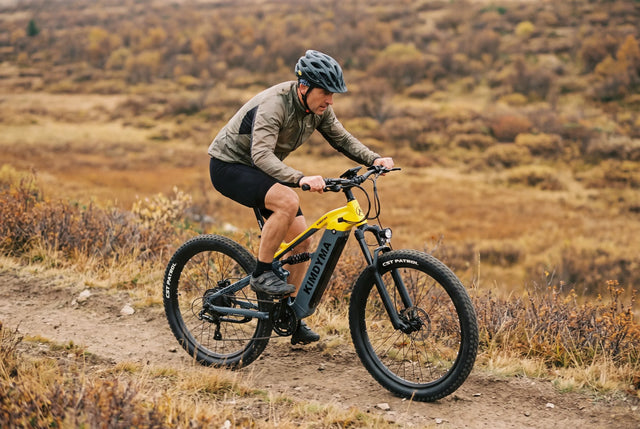
Most riders can expect 3 to 5 years from a lithium-ion pack, which works out to roughly 500 to 1,000 full charge cycles. That range is wide because e-bike battery lifespan depends far more on how you treat the pack than on its age. For mountain and gravel riders who climb hard, the load on the cells is higher than on a flat commuter, so habits matter even more.
A charge cycle means one full 0-100% discharge. You do not have to drain the battery in one go: two rides that each use 50% and are each followed by a recharge add up to one cycle. Partial charges therefore wear the pack just as full ones do, but they keep the cells in a gentler voltage range along the way. The basic chemistry is covered in this overview of the lithium-ion battery.
The 3-5 year figure from manufacturers is a calculated estimate, not a guarantee. It assumes typical use, moderate temperatures and sensible charging. A pack that sits in a hot van, is regularly run flat on steep climbs or is left empty all winter will fall short. A pack that is looked after can go beyond it.
So, how long do e-bike batteries last in practice? Think in terms of cycles and conditions, not just calendar years. A rider who does a few big mountain days a week will use up cycles faster than someone who rides at weekends, even on the same battery.

Charging habits that protect the cell chemistry
For everyday riding, keep the state of charge between roughly 20% and 80%. Cells are under the least stress in the middle of their range. Good e-bike battery charging habits are mostly about avoiding the two extremes: sitting full for days, and running completely empty.
- Partial charging is gentler. Topping up to about 80% after a ride is better than repeatedly charging to 100% and then draining to zero.
- Avoid deep discharge. Recharge once the display shows a low-assist warning, not after the bike has cut out on a fire road far from home.
- Use the original charger. The voltage and current profile must match the pack. For the 48V packs on our K01, K02 and K03, the matching unit is the 48V 4A charger with 54.6V output.
- Let it cool first. After a long, hard ride the pack is warm. Give it some time to settle before plugging in.
Charging to 100% now and then is not a problem, for example the evening before a long day out. The key is that it should not be the default for a bike that does short rides. If you do charge fully, try to ride soon afterwards instead of leaving the pack full for days.
Temperature: why heat hurts more than cold
Heat does more lasting damage than cold. High temperatures speed up the chemical ageing inside the cells, and in extreme cases contribute to overheating and thermal runaway. Cold, by contrast, mainly reduces what the battery can deliver for a while.
Hot cars and direct sun
Never leave the battery in a parked car or in direct sun, for example on a bike rack on a summer trailhead. We explain the risk in detail in why you should never leave an e-bike battery in the sun. If you stop for lunch, take the pack off or at least park the bike in shade.
Riding and charging in the cold
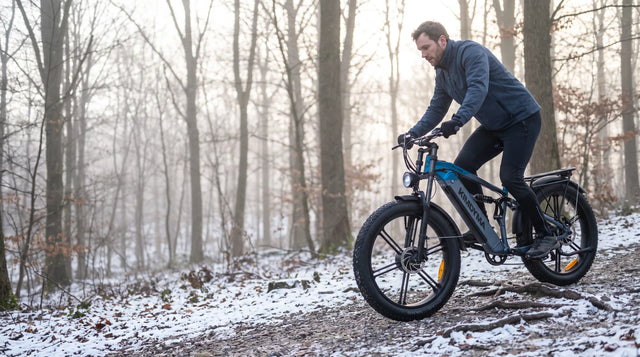
Riding in cold weather lowers range temporarily, and snow or soft ground makes the motor work harder still. This does not permanently damage the cells, and normal capacity returns once the pack warms up. Charging is different: a cold pack should be brought to room temperature before it goes on the charger. Bring it indoors after the ride and wait.

Winter storage: what to do before the bike goes into the shed
If the battery will sit unused for more than three months, store it at about 60% charge. That is the single most useful rule for e-bike battery winter storage. A pack left full ages faster, and a pack left empty can self-discharge into a damaged state that no charger will revive.
- Set the charge to about 60%. Not full, not near empty.
- Pick the right place. A dry, frost-free room at moderate temperature. Avoid damp garages, unheated sheds and spots next to radiators.
- Take it off the bike where possible, and disconnect it from the charger once it reaches the target level.
- Keep the contacts clean and dry. Wipe off mud and moisture, and check that nothing metal can touch the terminals.
- Check every 6 weeks. If the charge has dropped too low, top it up to around 60%.
For a fuller seasonal routine, see our guide to autumn storage and charging for a longer battery life. The same advice applies to a pack you only use for snow riding: do not let it go flat between outings.
Good e-bike battery care also means keeping the pack out of reach of anything flammable while charging. The NFPA guidance on lithium-ion batteries is a sensible reference for safe charging at home.
Signs your battery is ageing and when to replace it
The clearest sign is range that falls noticeably over several months on similar routes. Compare like with like: the same climb, the same assist level, similar weather. A gradual drop is normal wear; a sudden one deserves a closer look.
- Range loss: noticeably shorter rides under similar conditions.
- Slower charging than before, or a charger that finishes much earlier than it used to.
- Unexpected shutdowns, especially under load on a steep climb.
- Uneven readings: the charge display jumps, or drops quickly from a seemingly healthy level.
Before you replace the pack, rule out other causes such as a worn connector, a tired charger or a controller fault. If the cells themselves are the problem, compare costs: our repair or replace breakdown walks through the numbers. When a new pack makes more sense, a removable 48V option such as the 48V 20Ah 960Wh battery with Samsung cells is worth looking at. Running a failing pack until it dies is rarely a good plan, particularly when you ride far from help.
Frequently Asked Questions
How long do e-bike batteries last?
Most e-bike batteries last 3 to 5 years or roughly 500 to 1,000 full charge cycles, depending on how they are charged, stored and exposed to heat. Partial charges and moderate temperatures extend lifespan considerably.
Should I charge my e-bike battery to 100% every time?
No. For daily use, charging to about 80% and avoiding repeated full discharges is gentler on the cells. Charging to 100% occasionally, for example before a long ride, is fine.
What charge level should I store my e-bike battery at for winter?
Store the battery at around 60% charge if it will be unused for more than three months. Check it every six weeks and recharge to about 60% if it has dropped below 30%.
Can I charge my e-bike battery in cold weather?
Charge only once the battery has warmed up to room temperature. Charging a cold battery can cause lithium plating and permanent capacity loss, so let it acclimatise indoors first.